This article is part of EdTribune's series on Colorado districts that are reducing chronic absenteeism.
Source: Colorado Department of Education attendance and truancy statistics.
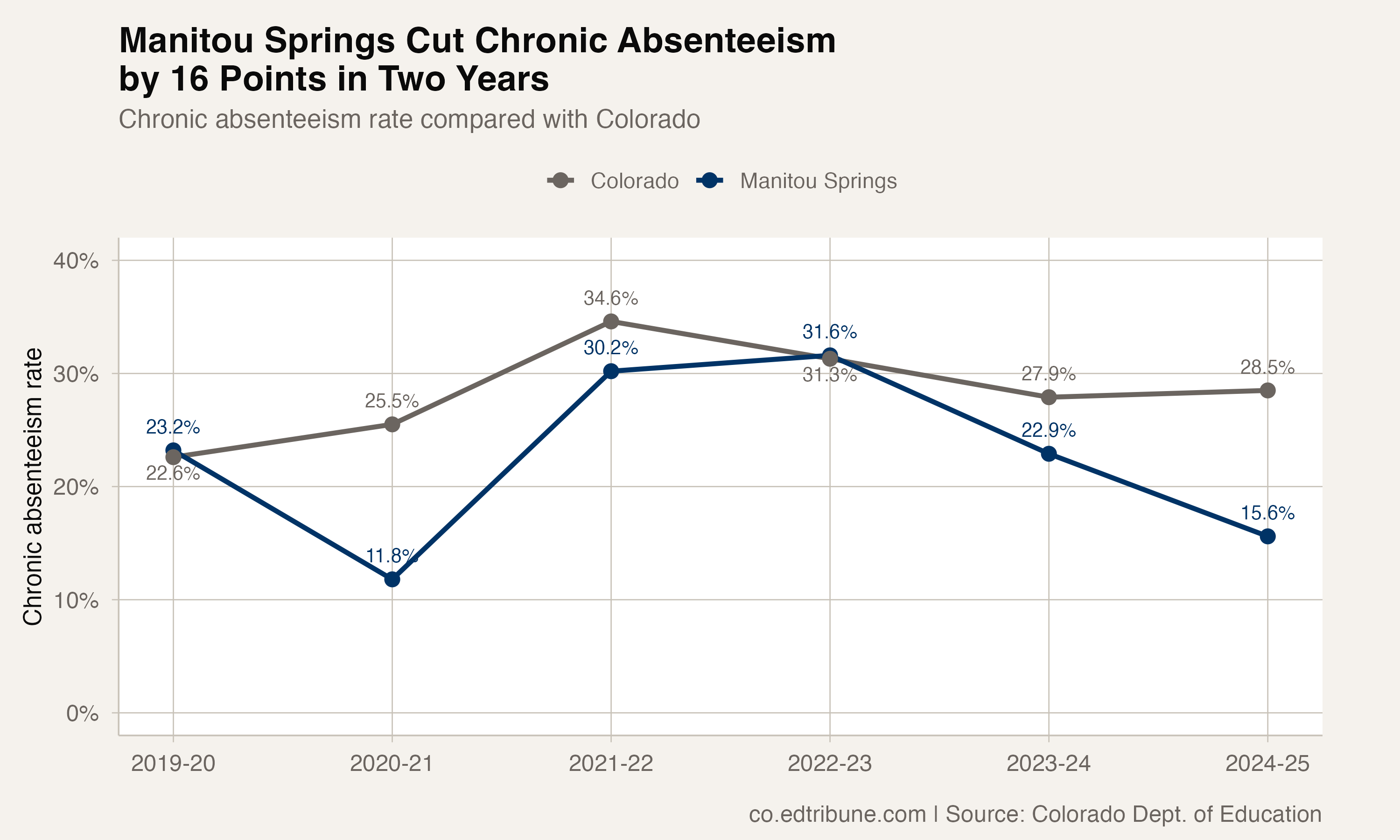
Manitou Springs↗ET reported 1,154 students in 2024-25. Its chronic absenteeism rate fell from 31.6% in 2022-23 to 15.6% in 2024-25, a 16-point decline. The 2024-25 rate was 12.9 points below Colorado's 28.5% rate.
The decline came in two consecutive steps: 8.7 percentage points in 2023-24 and 7.3 points in 2024-25. The 2024-25 rate was also below the district's 23.2% rate in 2019-20.
High school rates were far below statewide comparisons
In 2024-25, Manitou Springs posted chronic absenteeism rates of 7.0% in ninth grade, 9.4% in 11th grade, and 10.0% in 12th grade. Each was below one-third of the statewide rate for the same grade.
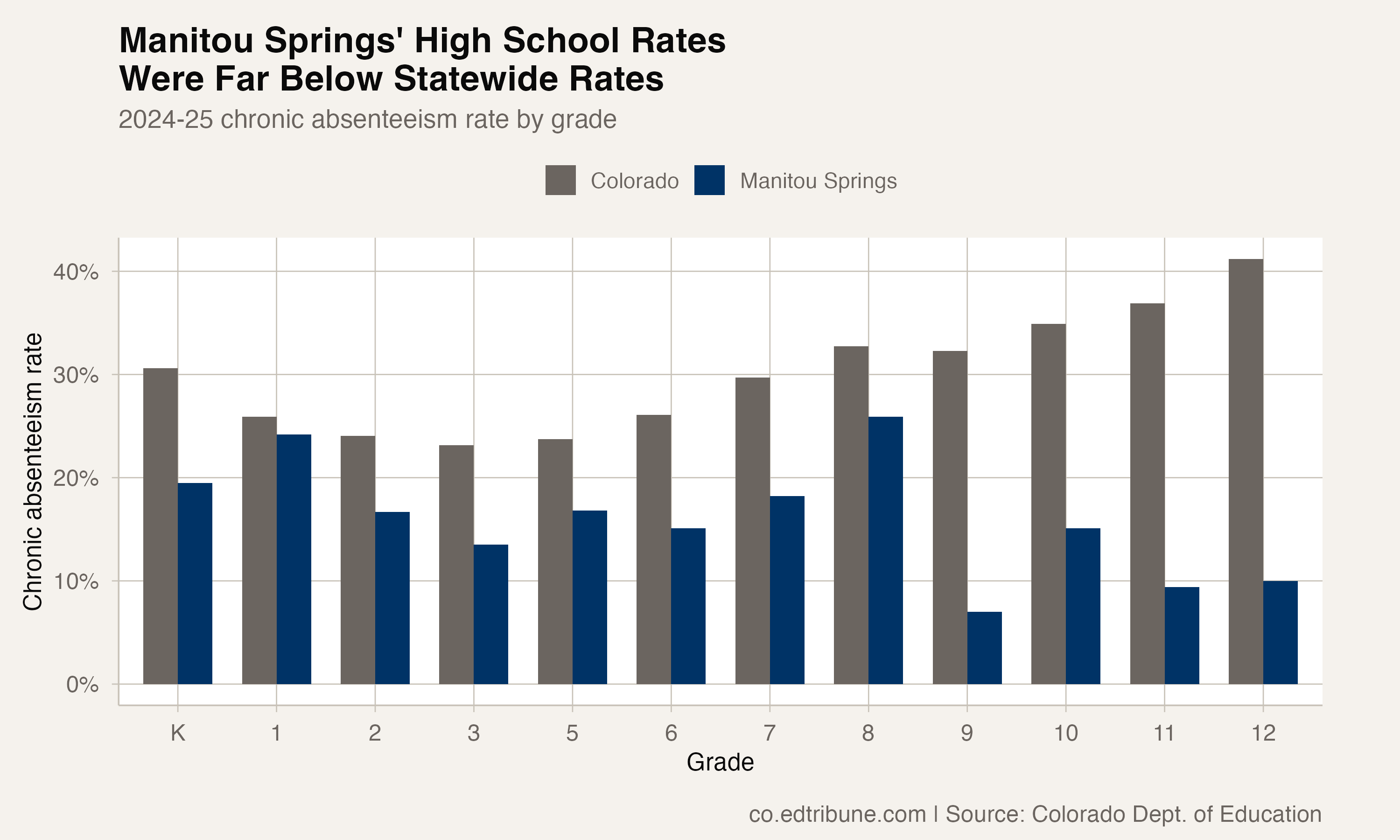
The district's first-grade rate was 24.2%, and its eighth-grade rate was 25.9%. Both were above the districtwide rate of 15.6%.
Enrollment and subgroup context
The same attendance files reported 1,530 students in 2019-20 and 1,154 in 2024-25. That is a decline of 376 students, or 24.6%, across five years.
The 2024-25 chronic absenteeism rate was 25.0% for Hispanic students, 24.3% for students eligible for free or reduced-price lunch, and 19.4% for students receiving special education services. Each was above the districtwide rate of 15.6%.
A volatile six-year record
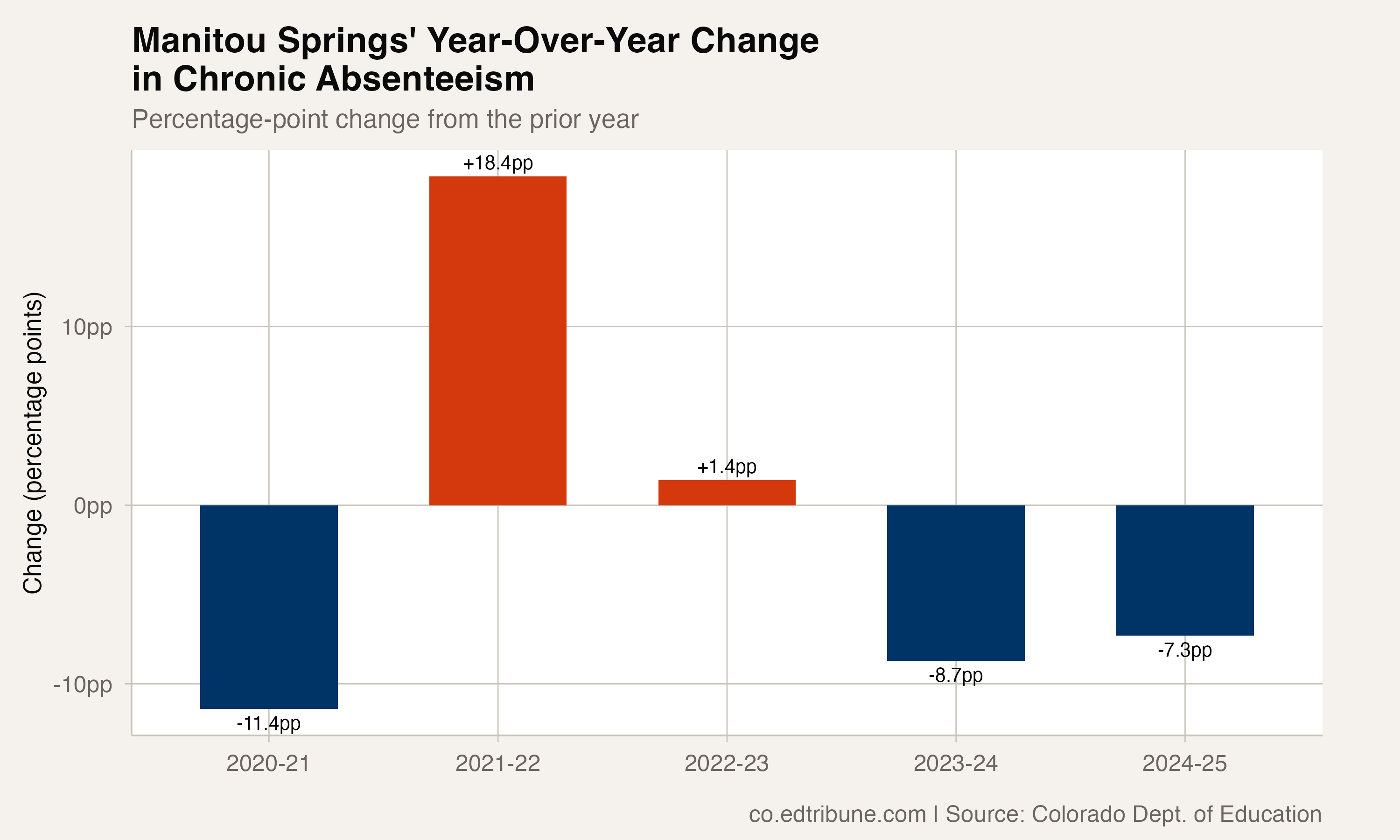
The district's rate moved from 23.2% in 2019-20 to 11.8% in 2020-21, 30.2% in 2021-22, and 31.6% in 2022-23 before falling to 15.6% in 2024-25. That history establishes a sharp recent improvement, but it does not identify a cause or guarantee that the lower rate will persist.
Detailed code that reproduces the analysis and figures in this article is available exclusively to EdTribune subscribers.
Discussion
Sign in to join the discussion.
Loading comments...