Colorado Now Has 17,500 More Seniors Than Kindergartners
Colorado's K-to-12th grade ratio collapsed from 105 to 77 in a decade, with 61% of districts now graduating more seniors than they enroll in kindergarten.
Centennial State Education Coverage, Driven by Data
Education News & Data
Local education reporting from every corner of Colorado, grounded in Colorado Department of Education data.
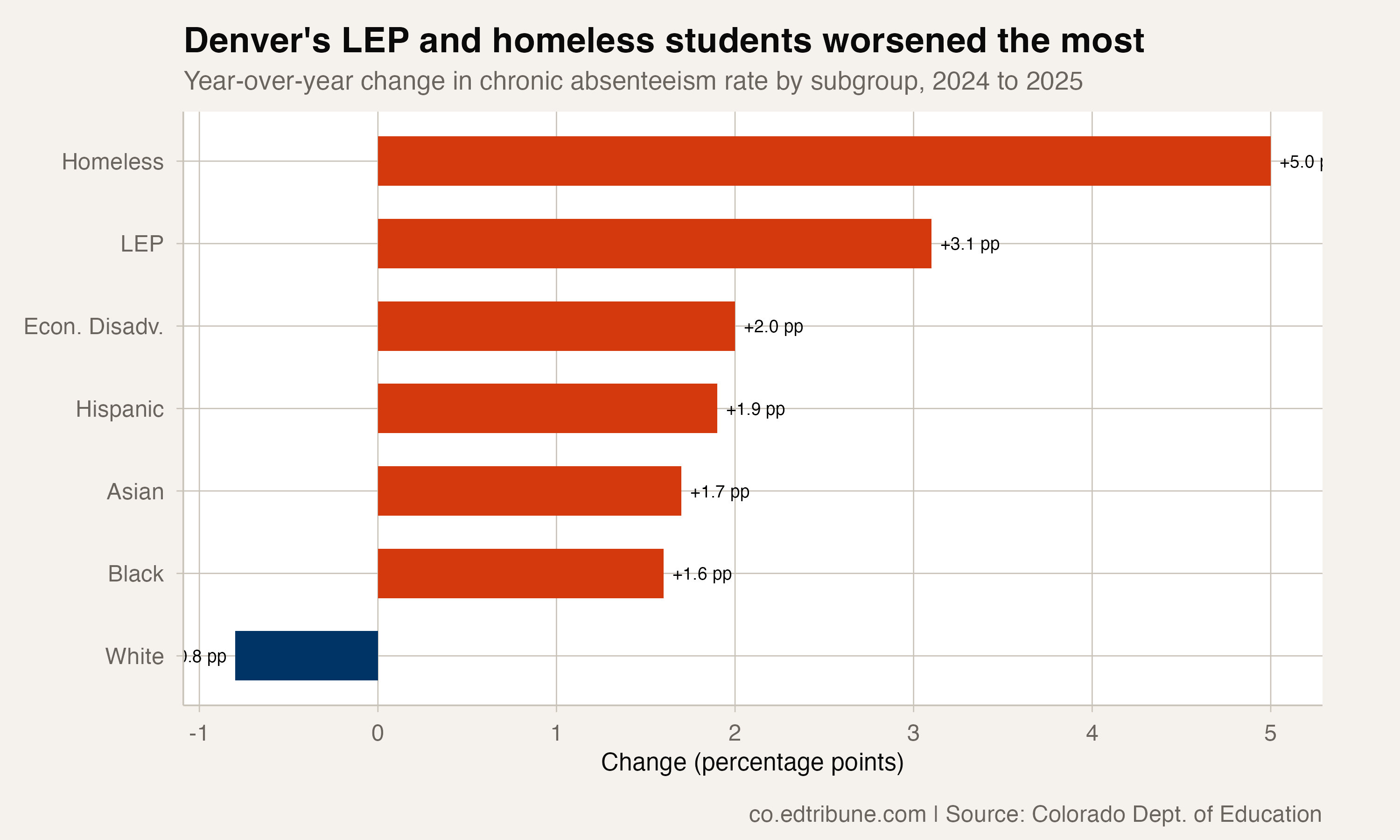
Chronic absenteeism among Denver's LEP students jumped to 44.2% in 2024-25, the sharpest increase among any subgroup except students who are currently homeless, as the district pointed to immigration enforcement as a factor.
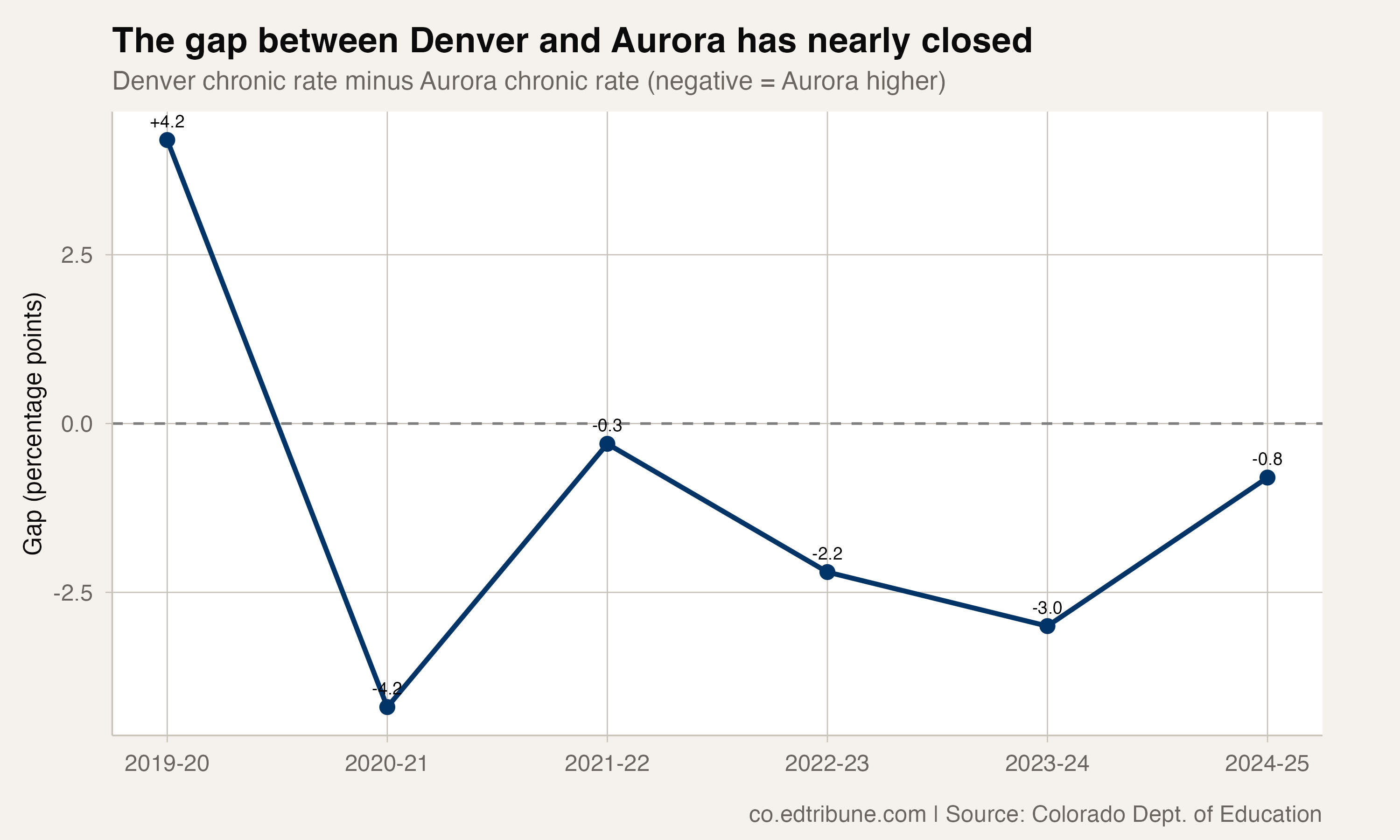
Denver's chronic absenteeism reversed course in 2024-25 while neighboring Aurora kept improving for a third straight year, narrowing a gap that once seemed structural.
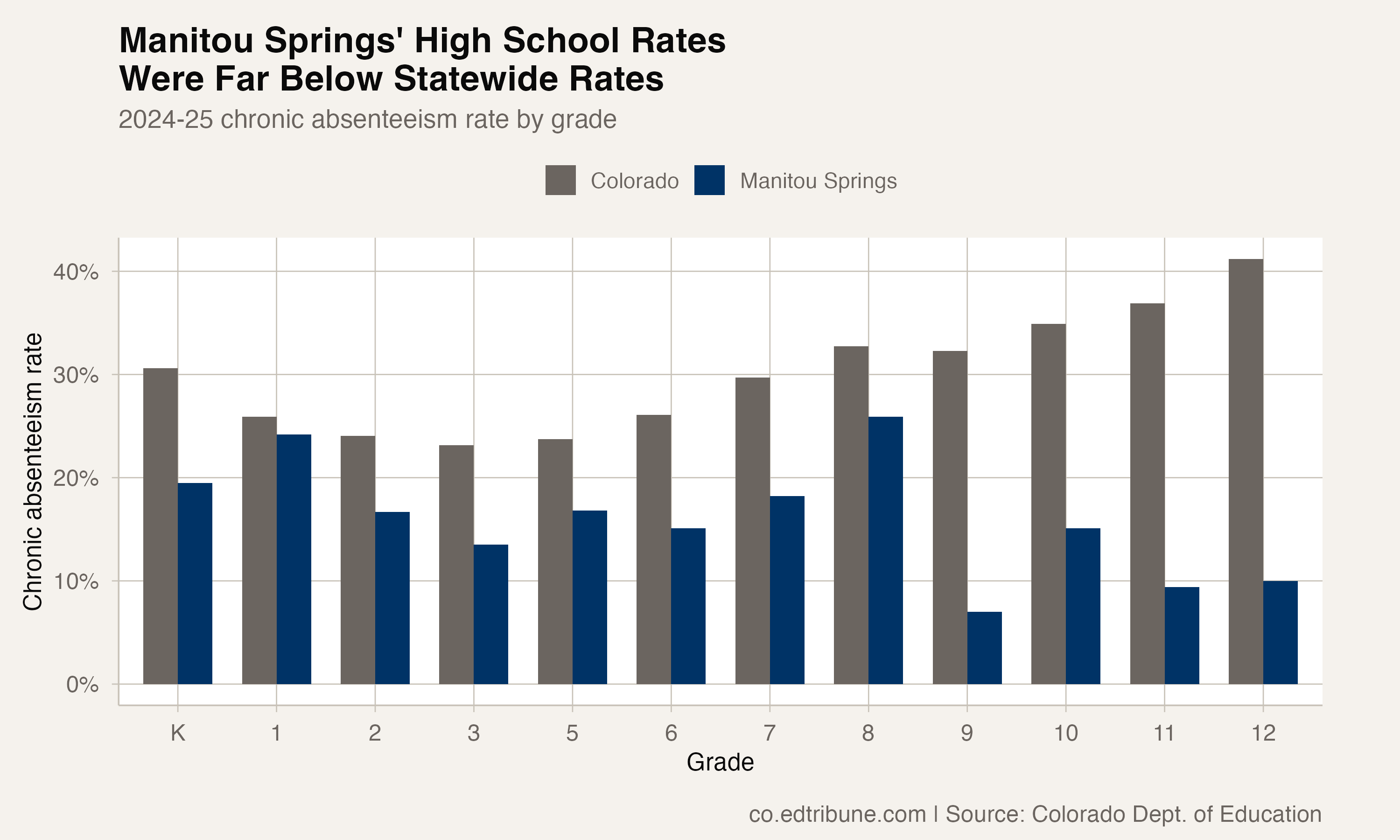
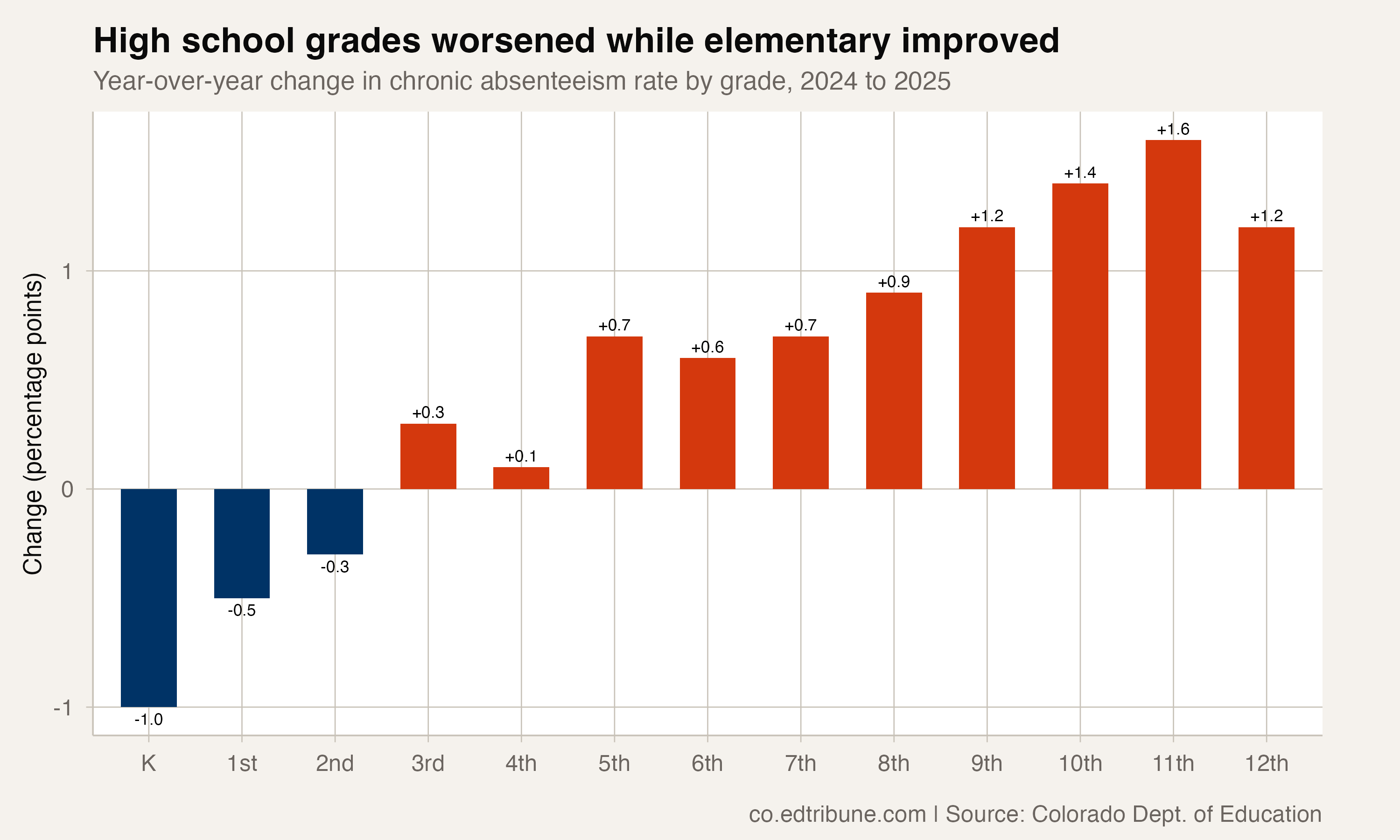
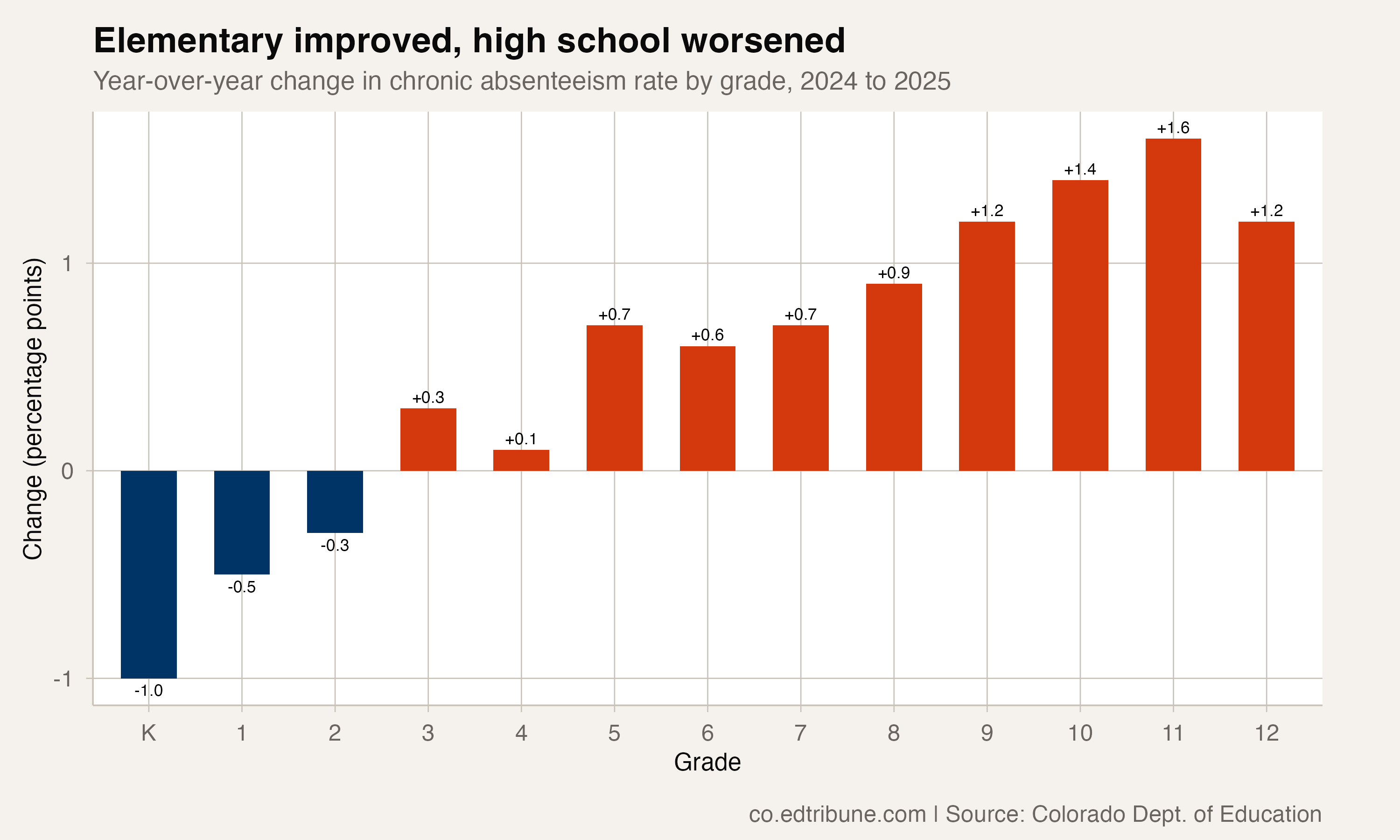
Colorado's chronic absenteeism climbs from 23% in elementary to 41% in 12th grade. K-2 rates improved in 2024-25 while all four high school grades worsened.
More than half of Colorado's Native American students attended regularly in 2024-25, but the 45.3% chronic-absence rate worsened faster than any other group's. A handful of districts, led by Douglas County at 23%, point to what's working.
Colorado's K-to-12th grade ratio collapsed from 105 to 77 in a decade, with 61% of districts now graduating more seniors than they enroll in kindergarten.
Five years after the pandemic, fewer than one in five measurable Colorado districts have chronic absenteeism rates at or below their 2019-20 levels, with most large districts still well above baseline.
Weld RE-4 in Windsor has grown every year for 11 straight years, the only Colorado district with an unbroken streak, adding 3,781 students as the state shrank.
A Western Slope district of 4,641 students posted one of Colorado's most dramatic attendance turnarounds, dropping from the state's worst large-district rate to well below average in four years.
Multiracial enrollment surged 41% in a decade, adding 14,096 students even as Colorado's schools shrank. The category now outnumbers Black students statewide.
Denver Public Schools' student who is currently homeless chronic absenteeism rate hit 76.2% in 2024-25, worsening by 5 points as the district's equity gaps widened across nearly every subgroup.
Denver's six largest suburban districts have lost a combined 35,776 students from their peaks. All six hit all-time lows in 2025-26.
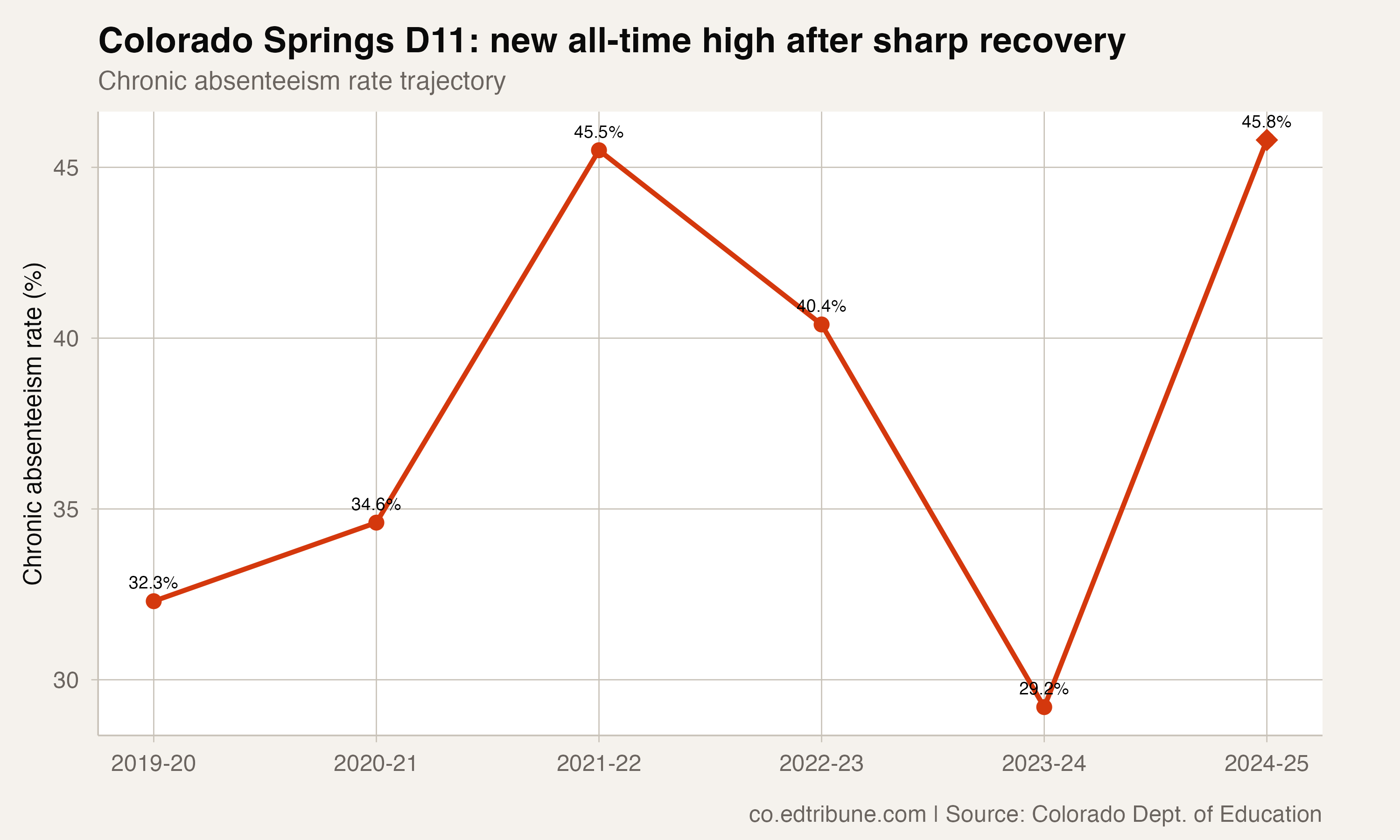
Colorado Springs District 11 saw chronic absenteeism surge 16.6 percentage points in one year, the largest swing among any large Colorado district, with more than half of Black and Hispanic students now chronically absent.
After two years of accelerating improvement, Colorado's chronic absenteeism rate ticked back up to 28.5% in 2025, putting the state's goal of 15% by 2027-28 out of reach.
Native American students in Colorado public schools dropped from 6,420 to 4,974 over 11 years, declining nearly twice as fast as white enrollment.
Colorado's charter schools doubled their market share in a decade, but growth has collapsed to 0.3%, raising questions about the sector's ceiling.