Correction: An earlier version of this article stated that Colorado had recovered 50.8% of the gap between peak and pre-COVID chronic absenteeism levels. The correct figure is 55.8%. The article has been updated.
For two years, Colorado's chronic absenteeism numbers moved in the right direction. The rate fell 3.3 percentage points in 2022-23, then another 3.4 points in 2023-24, the kind of accelerating improvement that made a statewide goal of 15% by 2027-28 feel ambitious but not impossible.
Then the improvement stopped. In 2024-25, Colorado's chronic absenteeism rate rose to 28.5%, up 0.6 percentage points from the prior year. It was the first increase since the pandemic peak, and it added 4,005 students to the chronically absent population even as total enrollment declined by more than 7,000.
The reversal leaves Colorado 13.5 percentage points above its stated goal with three school years remaining to reach it. The math no longer works.
The recovery that wasn't
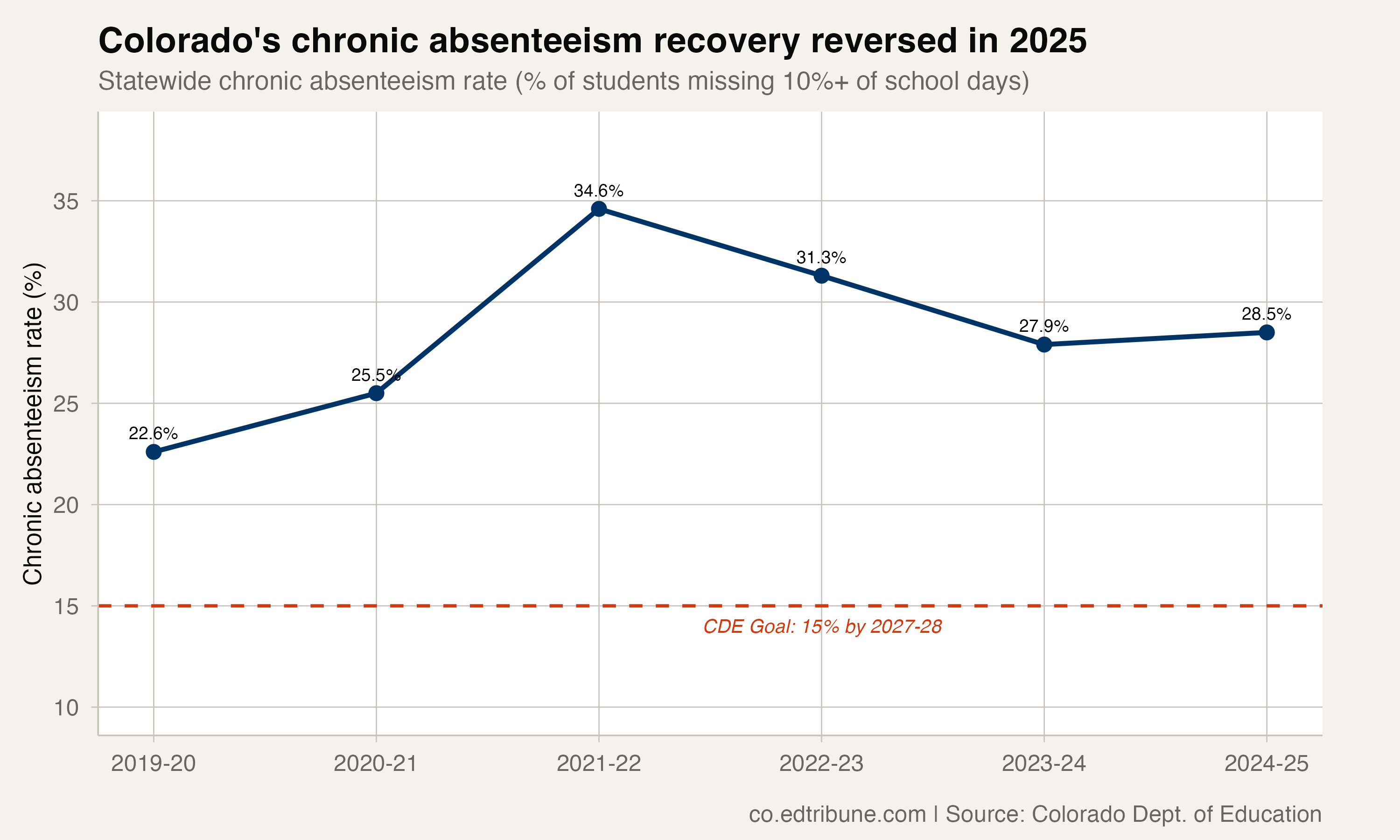
Colorado's chronic absenteeism trajectory tells a story in three acts. The rate rose from 22.6% in 2019-20 to a peak of 34.6% in 2021-22, when 317,796 students missed 10% or more of their school days. The recovery that followed was the fastest in the dataset: a 3.3 percentage point drop in 2022-23, accelerating to 3.4 points the following year.
By the end of 2023-24, the state had clawed back 55.8% of the gap between peak and pre-COVID levels. At that pace, Colorado would have reached 15% by 2029, still a year past its self-imposed deadline but within striking distance.
The 2024-25 reversal changed the calculus entirely. Instead of continuing at 3.4 points per year of improvement, the rate moved in the wrong direction.
The numbers behind the reversal
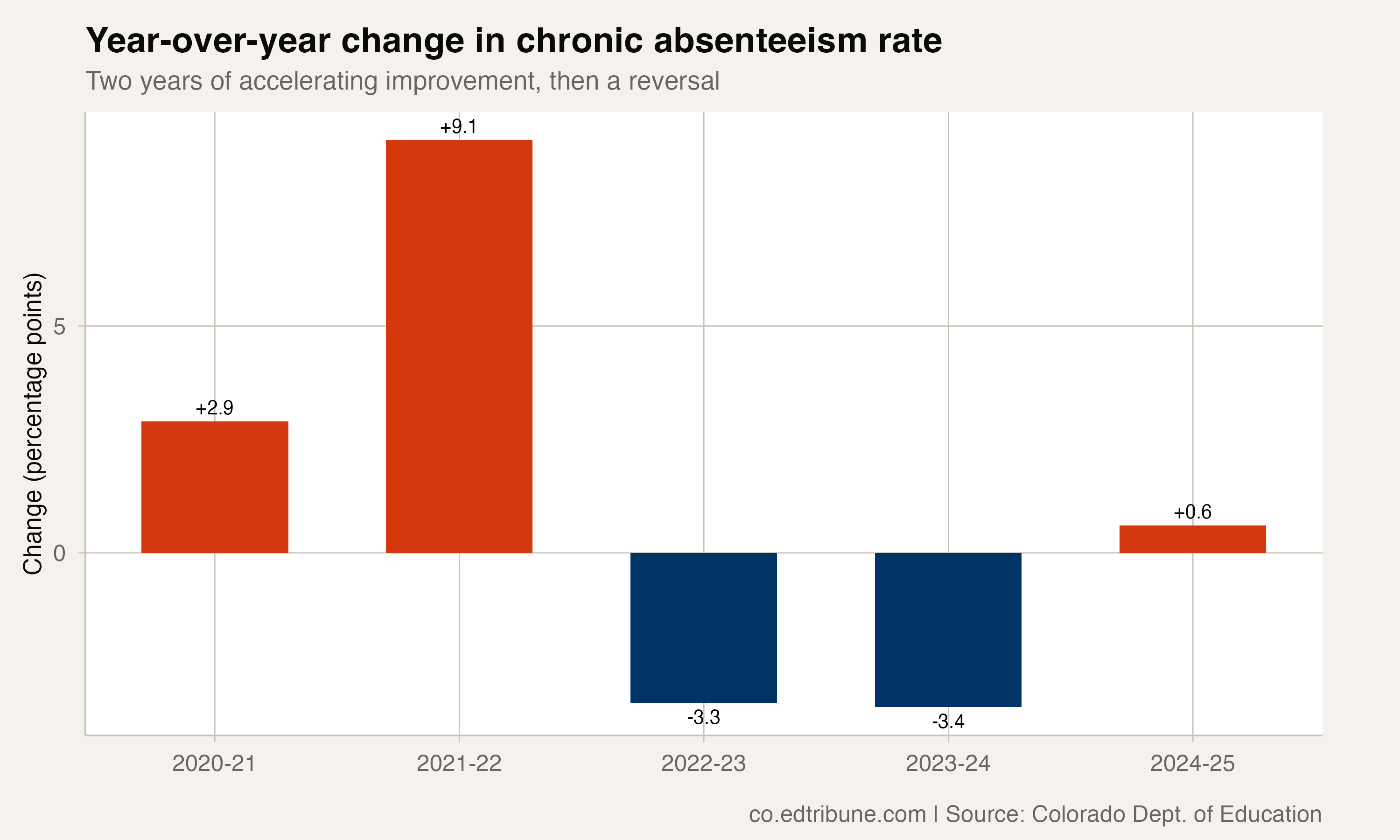
The reversal was not dramatic in percentage terms. A 0.6 point increase sounds manageable against a 12-point pandemic surge. But the context makes it alarming: it came after a pattern of accelerating improvement, and it hit during a year when 102 of 178 districts actually reduced their chronic absenteeism rates.
The statewide rate rose because a handful of large districts worsened enough to overwhelm the majority's progress. Colorado Springs D11↗ET alone added 3,955 chronically absent students with a 16.6 point spike. Denver↗ET added roughly 900 more. In a system where the ten largest districts account for approximately half of all chronically absent students, a few bad years in big places undo a lot of quiet progress elsewhere.
252,756 students and counting
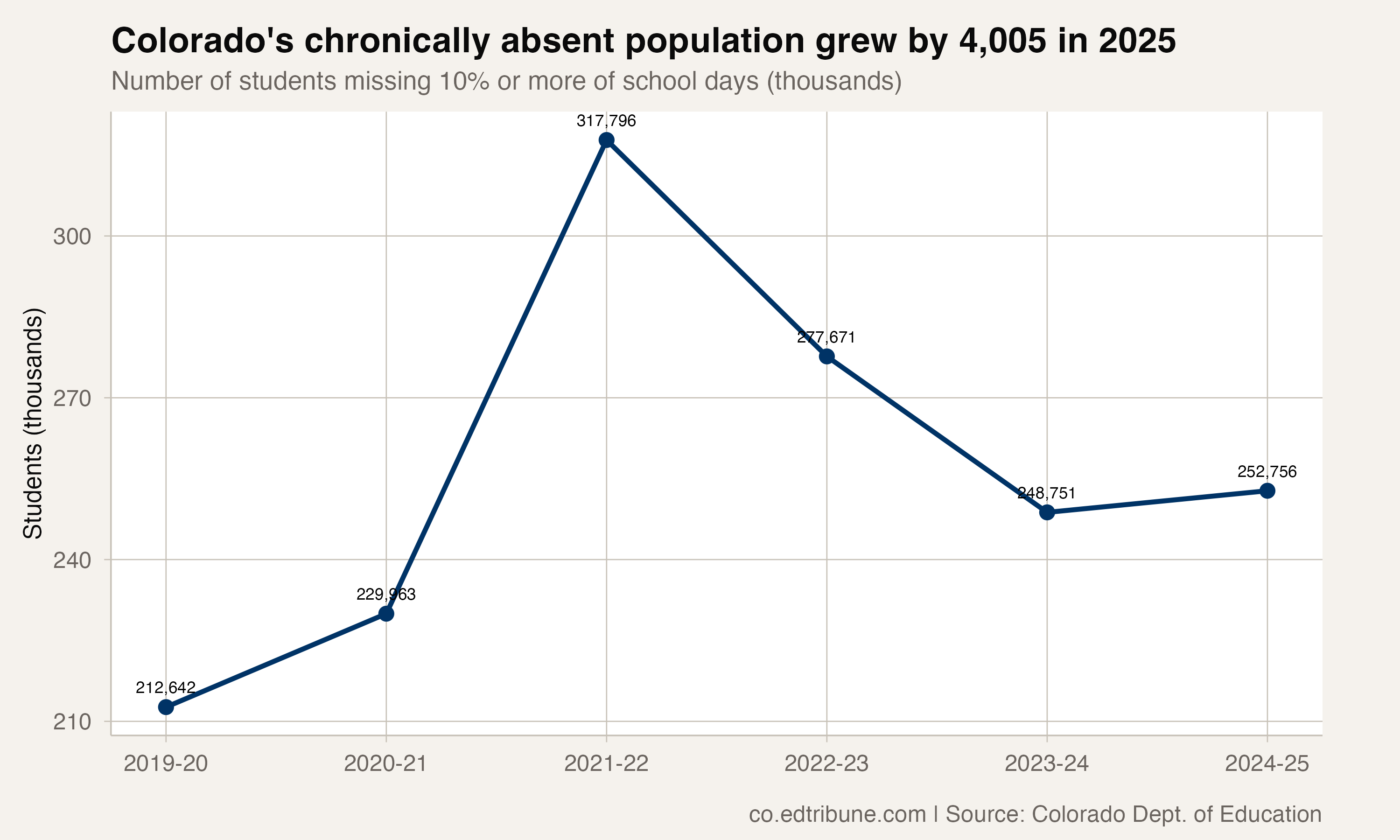
Behind the percentages sits a population of 252,756 students who missed more than 10% of the 2024-25 school year. That number is 40,114 higher than the 2019-20 baseline of 212,642, which was itself a COVID-disrupted year where spring closures may have artificially suppressed absence counts.
The chronically absent population grew by 4,005 students in 2024-25 while total enrollment shrank by 7,018. The share of students showing up regularly is shrinking from both ends: fewer students enrolled, and more of those who remain are missing significant time.
Why the 2028 goal is unreachable
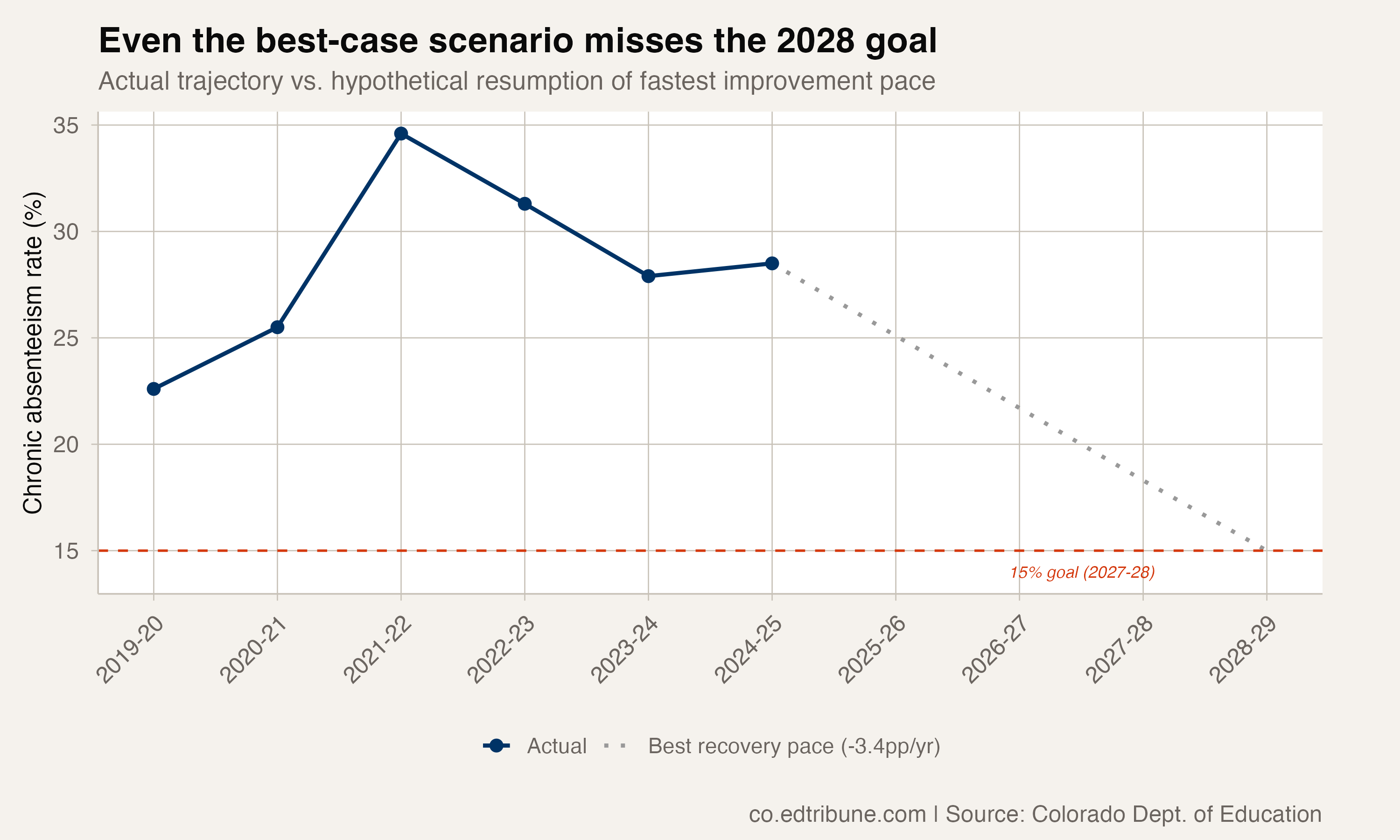
Colorado committed to cutting chronic absenteeism to 15% by 2027-28 as part of a national campaign. Even before the reversal, the timeline was aggressive. At the state's best sustained improvement pace of 3.4 percentage points per year, reaching 15% from the 2023-24 rate of 27.9% would have required four more years of unbroken progress, landing in 2028-29, one year past the deadline.
Now the starting point is worse. From 28.5%, the state would need to drop an average of 4.5 percentage points per year for three consecutive years, a pace it has never achieved. The fastest single-year improvement in the dataset was 3.4 points.
None of this means the goal was wrong. Setting ambitious targets can focus attention and resources. But the gap between aspiration and arithmetic has grown wide enough that honest conversation about timelines may be more productive than clinging to a number that the data no longer supports.
Colorado's graduation rate hit a decade high of 85.6% in 2024-25 with its dropout rate at a historic low of 1.6%, a reminder that chronic absenteeism and educational outcomes do not always move in lockstep. Students are graduating at record rates while also missing more school than at any point in recent history, a tension that defies simple narratives about attendance driving achievement.
Detailed code that reproduces the analysis and figures in this article is available exclusively to EdTribune subscribers.
Discussion
Sign in to join the discussion.
Loading comments...