Absence
Most Colorado agency absence rates fell as the statewide rate declined
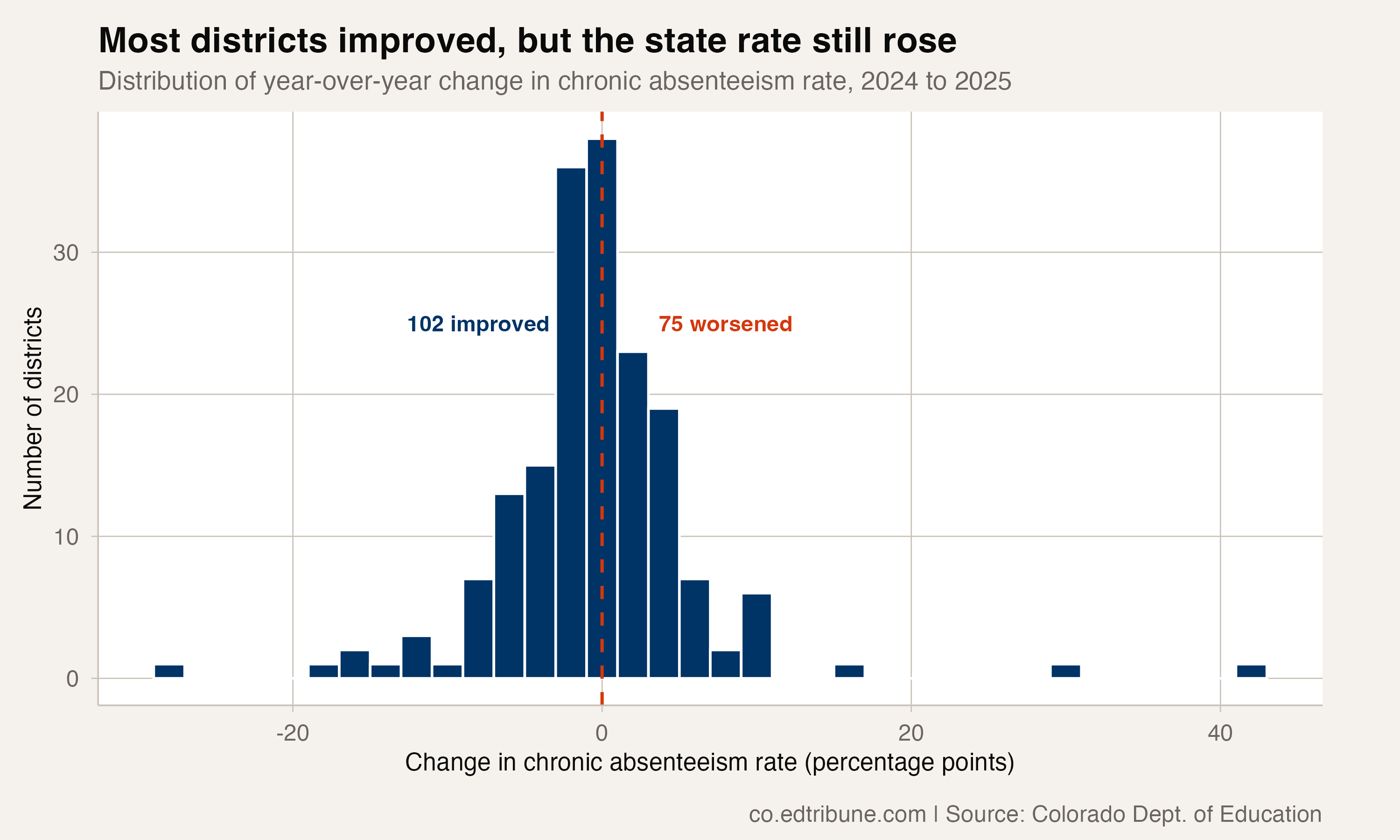
Rates fell in 107 of 177 matched agencies in 2025–2026, while the statewide rate declined from 28.4% to 27.5%. The preceding year had a different statewide result.
Centennial State Education Coverage, Driven by Data
Page 2 of 3
Rates fell in 107 of 177 matched agencies in 2025–2026, while the statewide rate declined from 28.4% to 27.5%. The preceding year had a different statewide result.
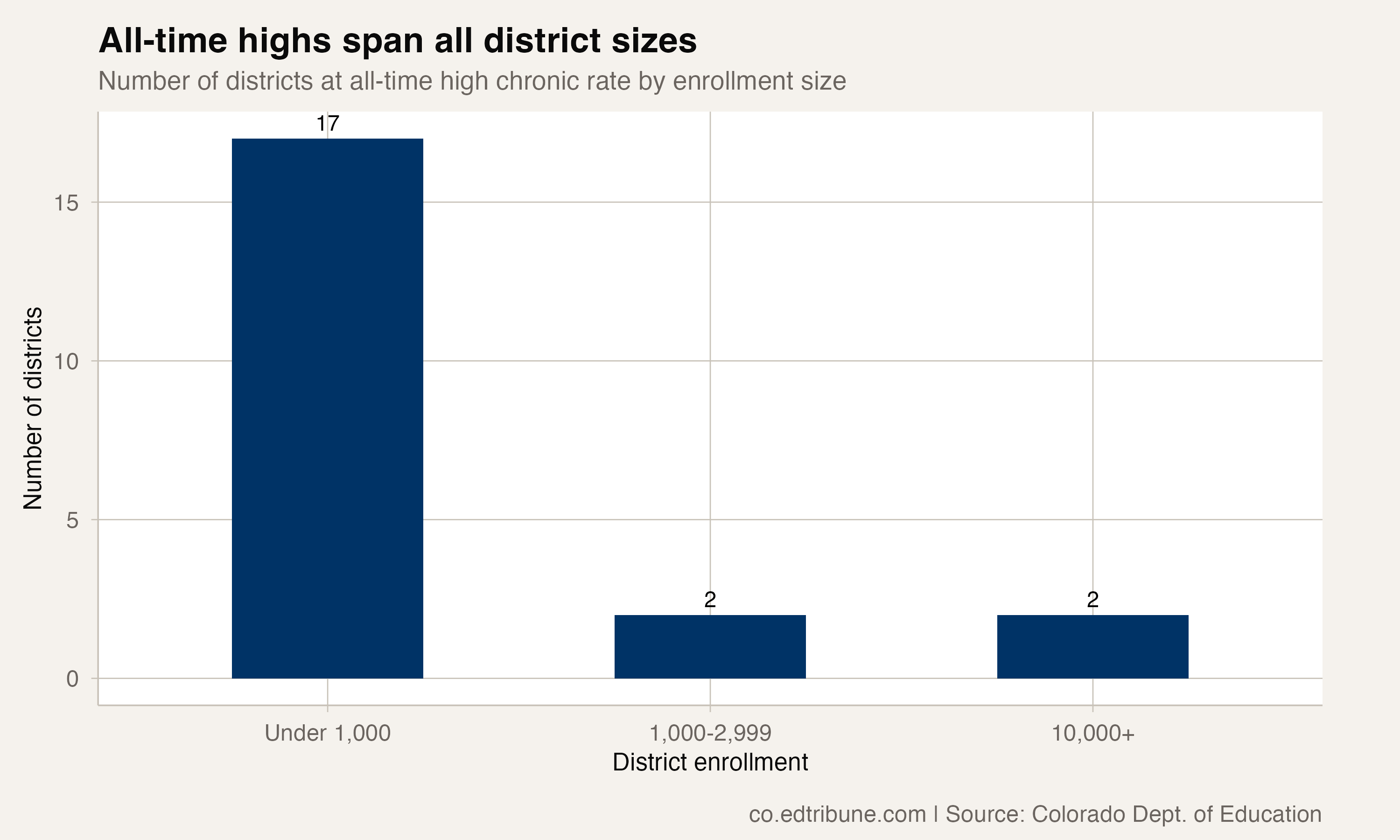
Among 177 agencies with complete recent rate histories, 31 had their highest chronic absence rate in 2025–2026. Most had fewer than 1,000 students in their attendance population.
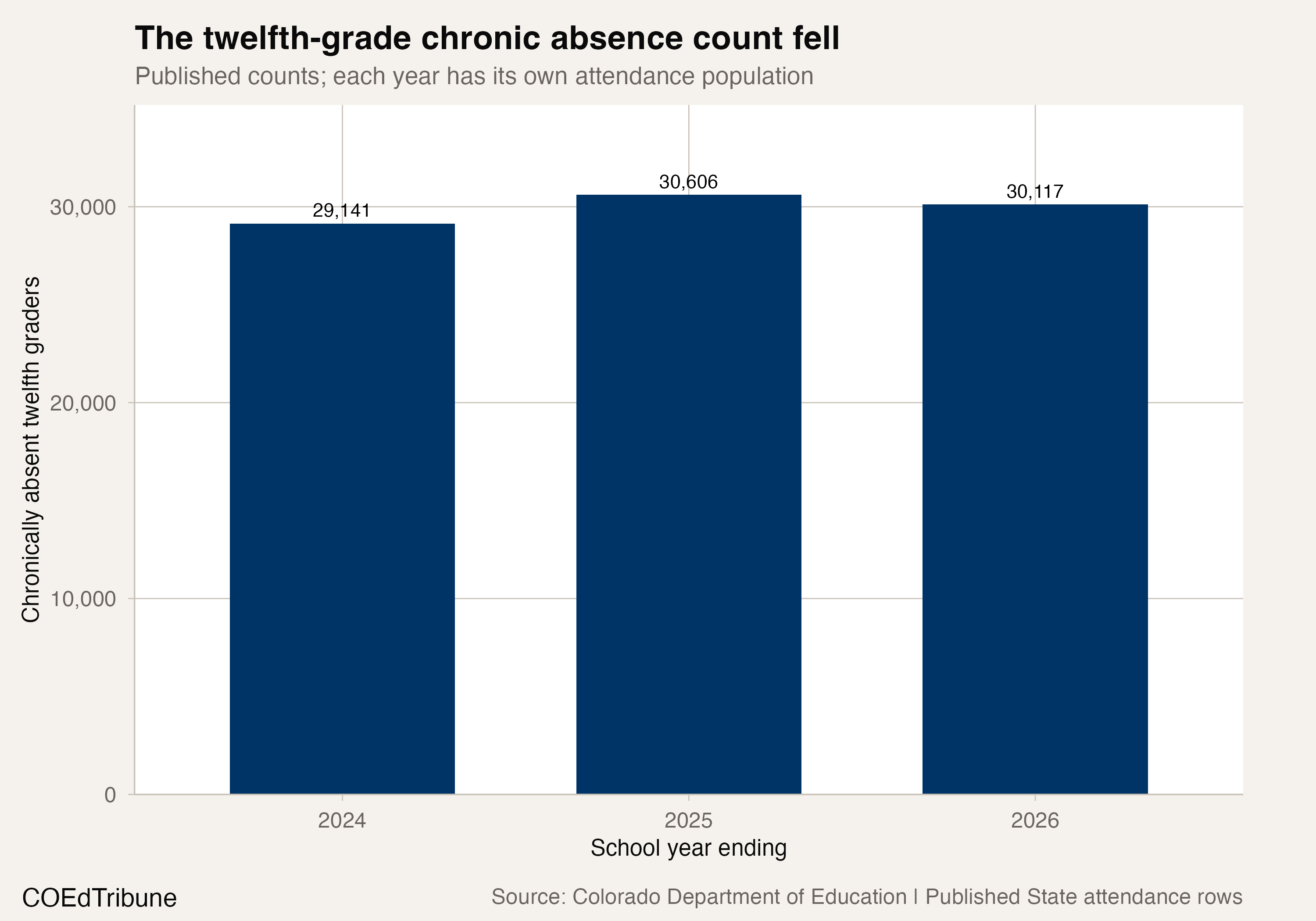
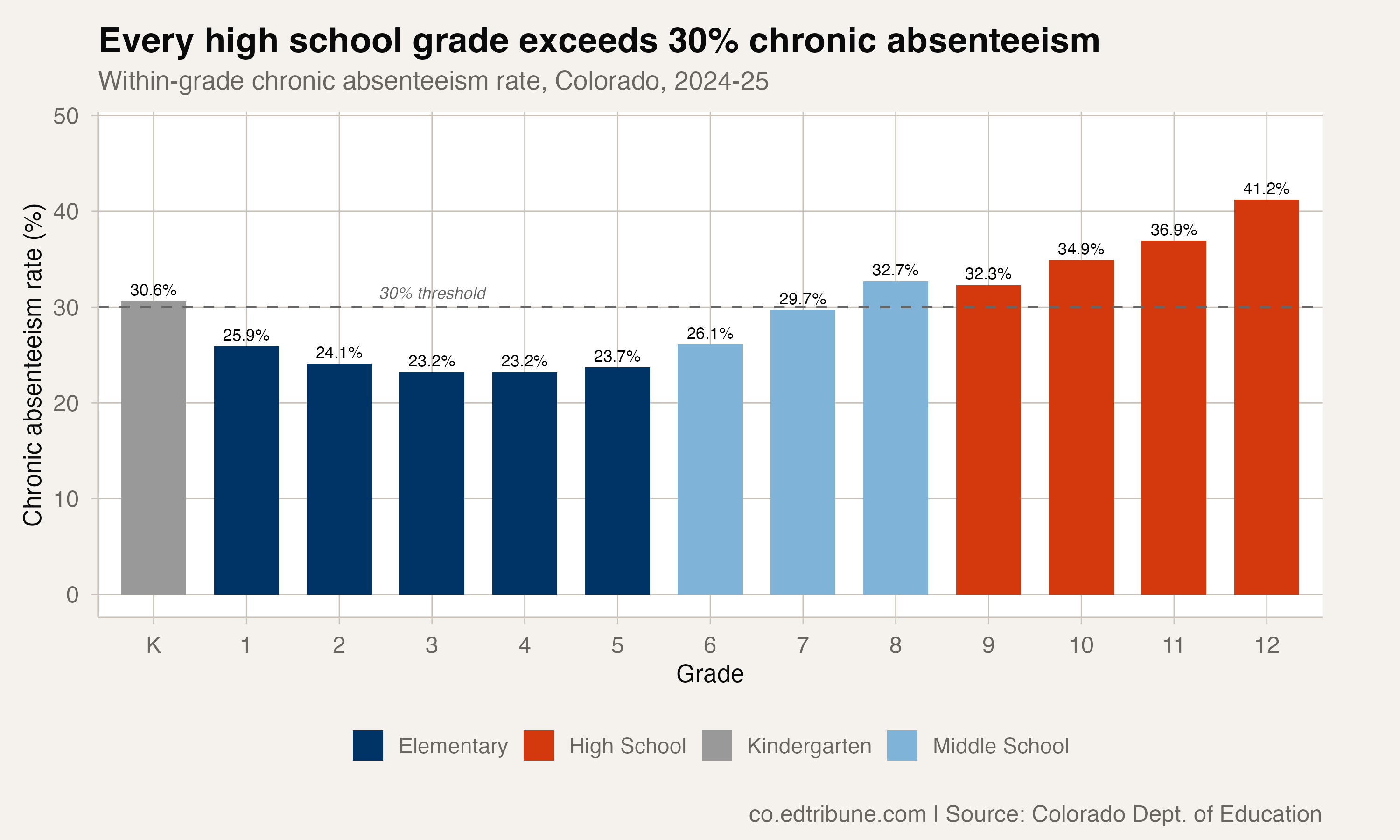
Colorado recorded 30,117 chronically absent twelfth graders in 2025–2026, fewer than the year before. Their published rate remained the highest among reported grades.
Denver’s published English-learner chronic absence rate fell from 44.2% to 42.4% in 2025–2026, with 1,293 fewer students counted as chronically absent.
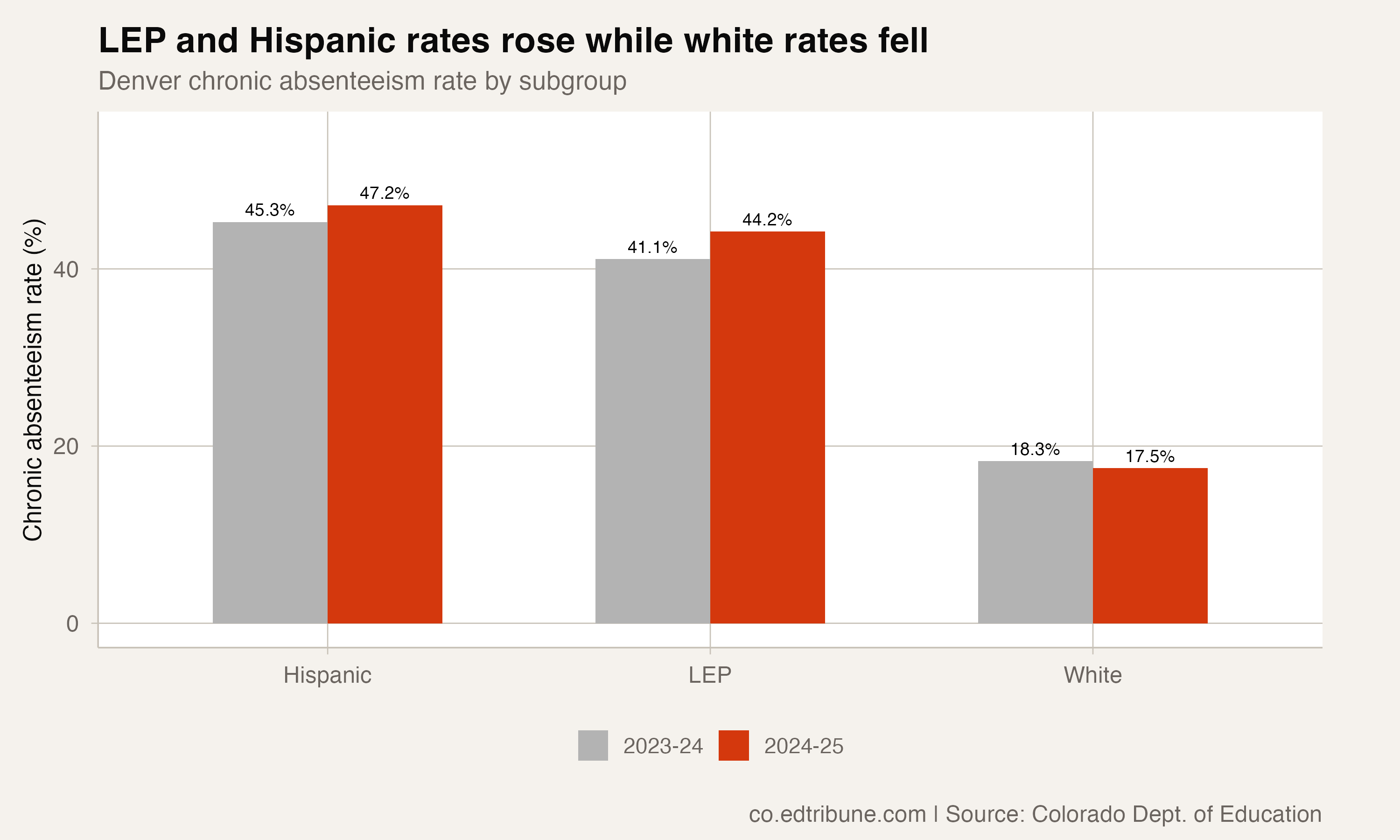
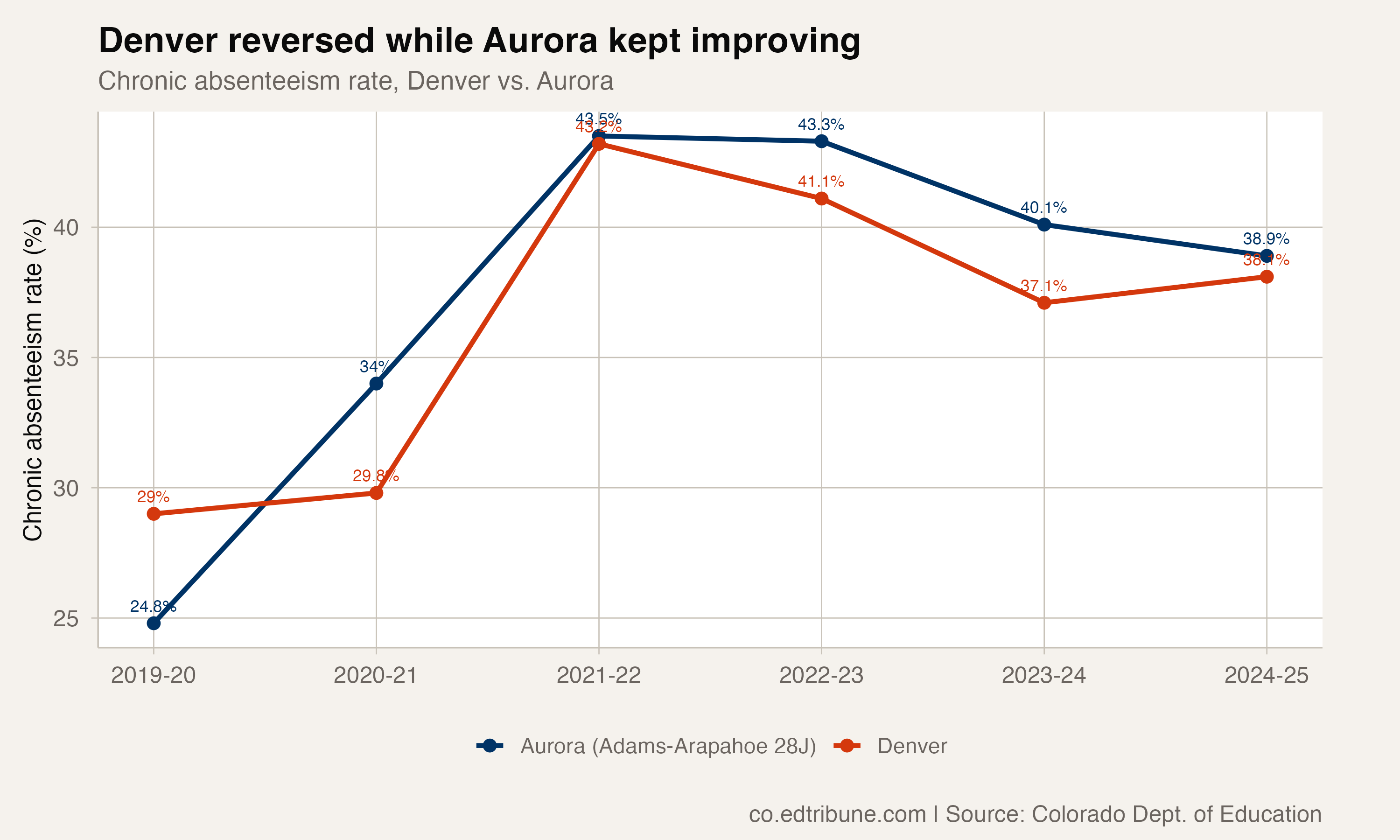
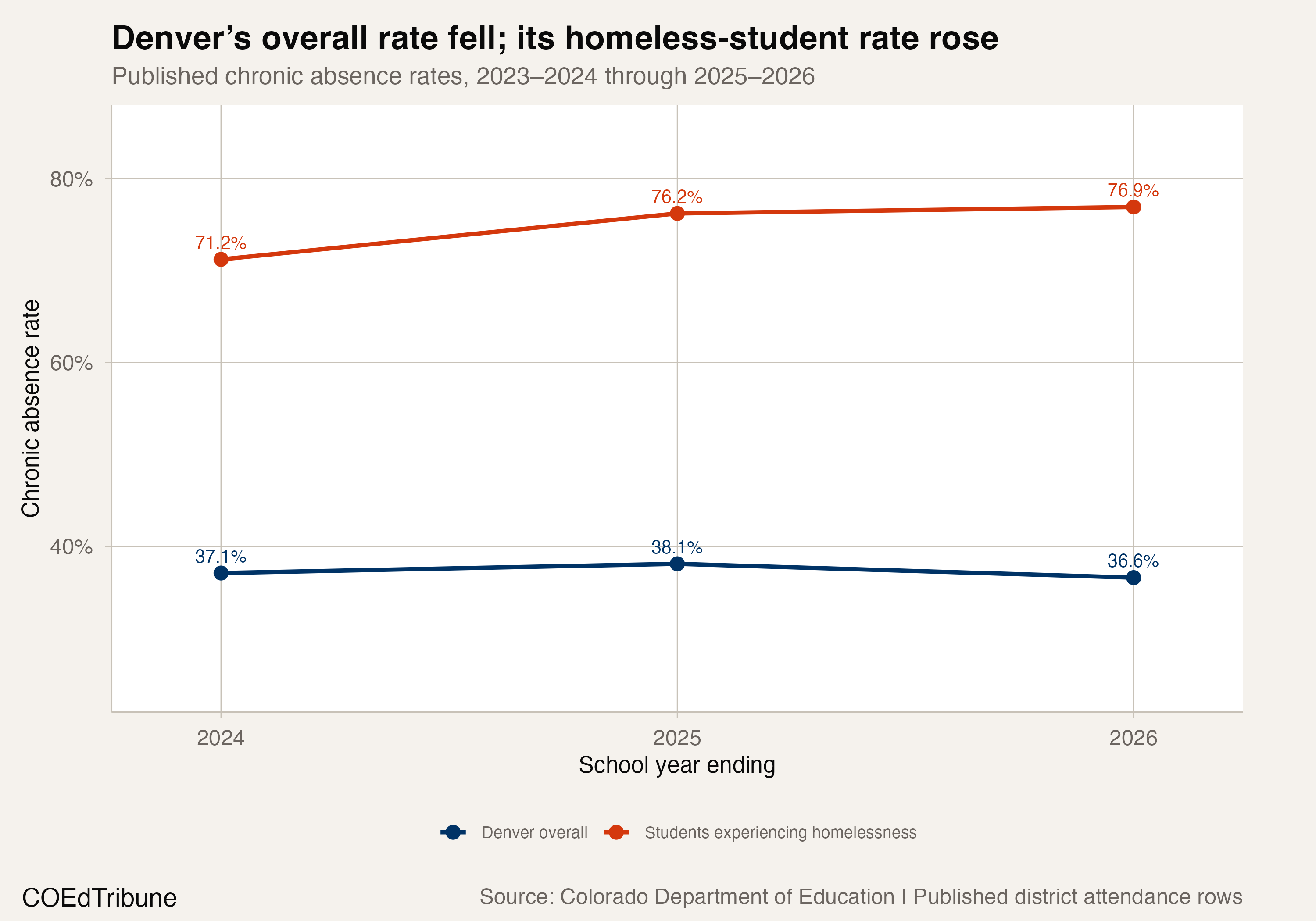
Both districts’ overall rates fell in 2025–2026, while rates for students experiencing homelessness rose in each.
Every published grade rate was lower in 2025–2026. Twelfth grade remained highest at 41.0%, while ninth grade fell below 30%.
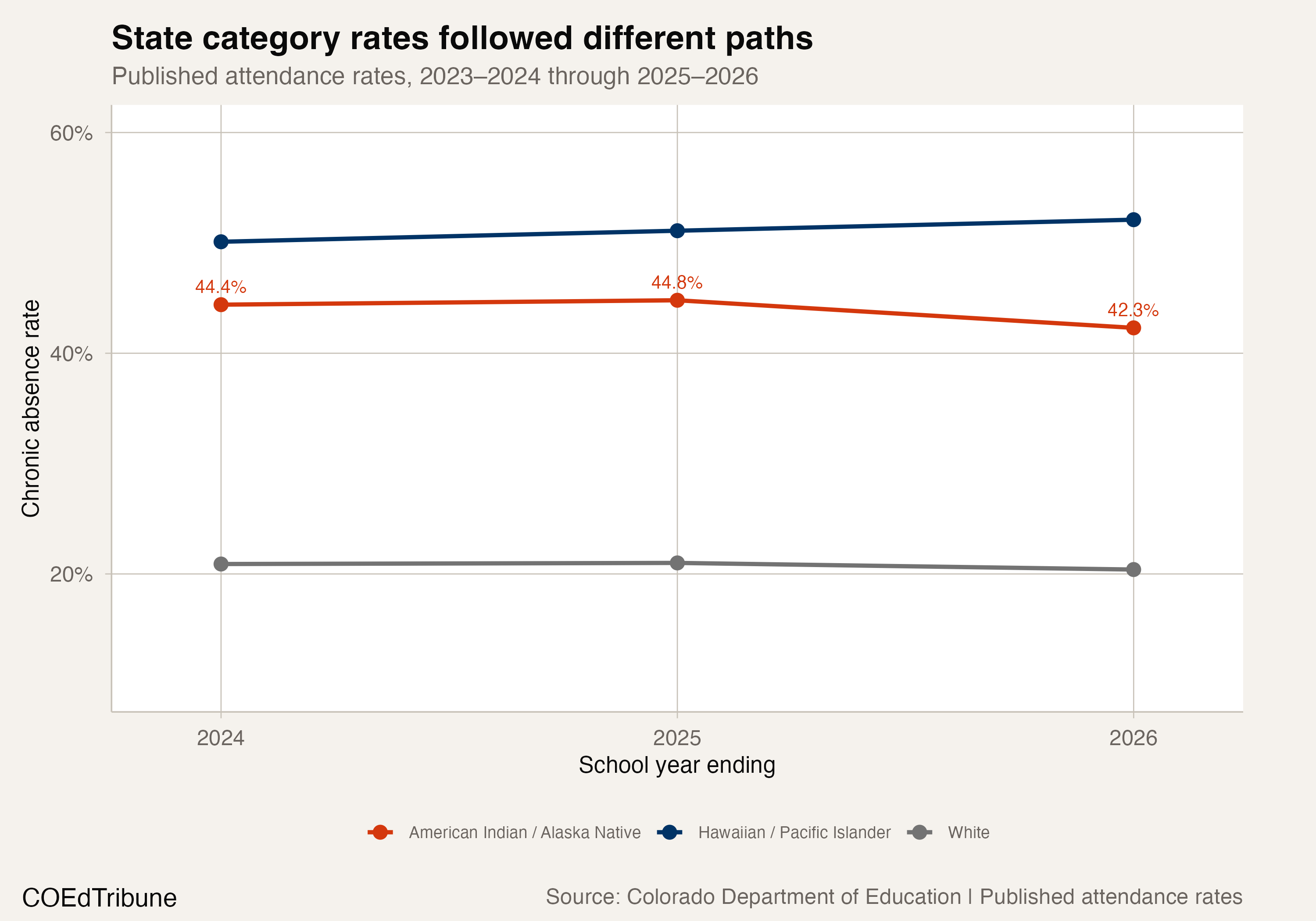
Published attendance figures show a 2.5-point decline in 2025–2026. Reported rates still differed across racial categories and selected districts.
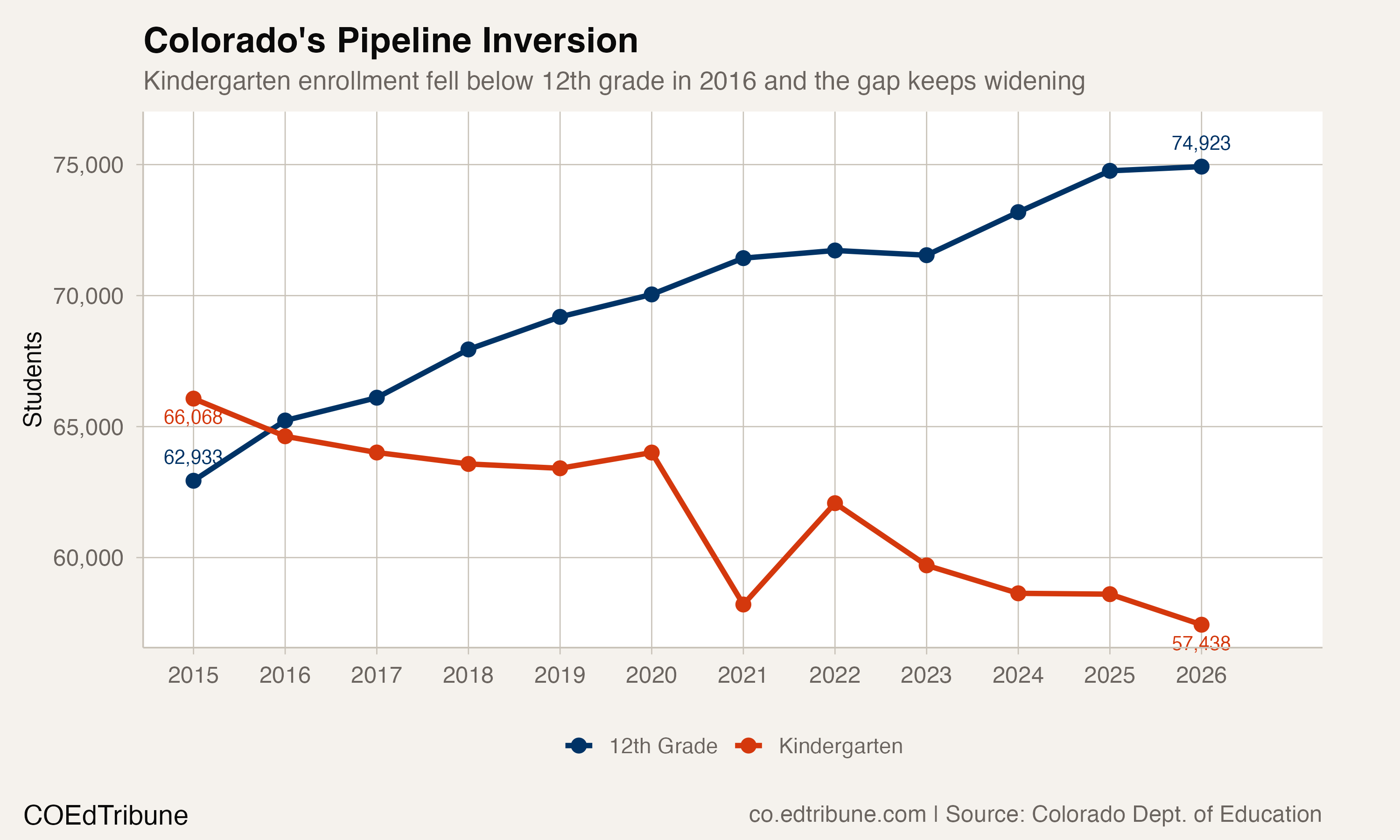
Colorado reported 57,438 kindergartners and 74,923 twelfth graders in 2025–2026. These are enrolled grade counts, rather than graduates or a linked cohort forecast.
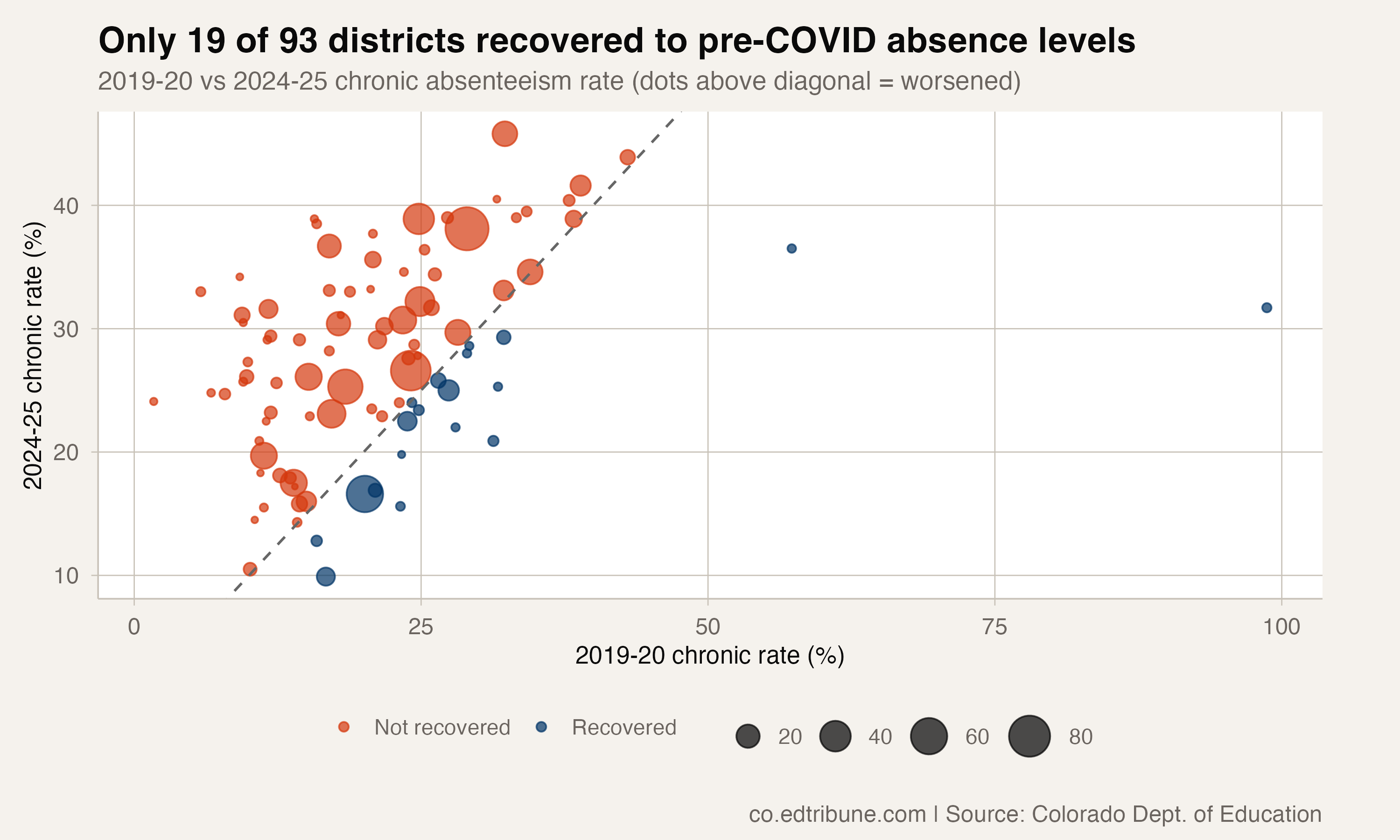
A defined comparison of 2022–2023 and 2025–2026 attendance records finds lower rates in most eligible agencies. It does not measure pre-pandemic recovery.
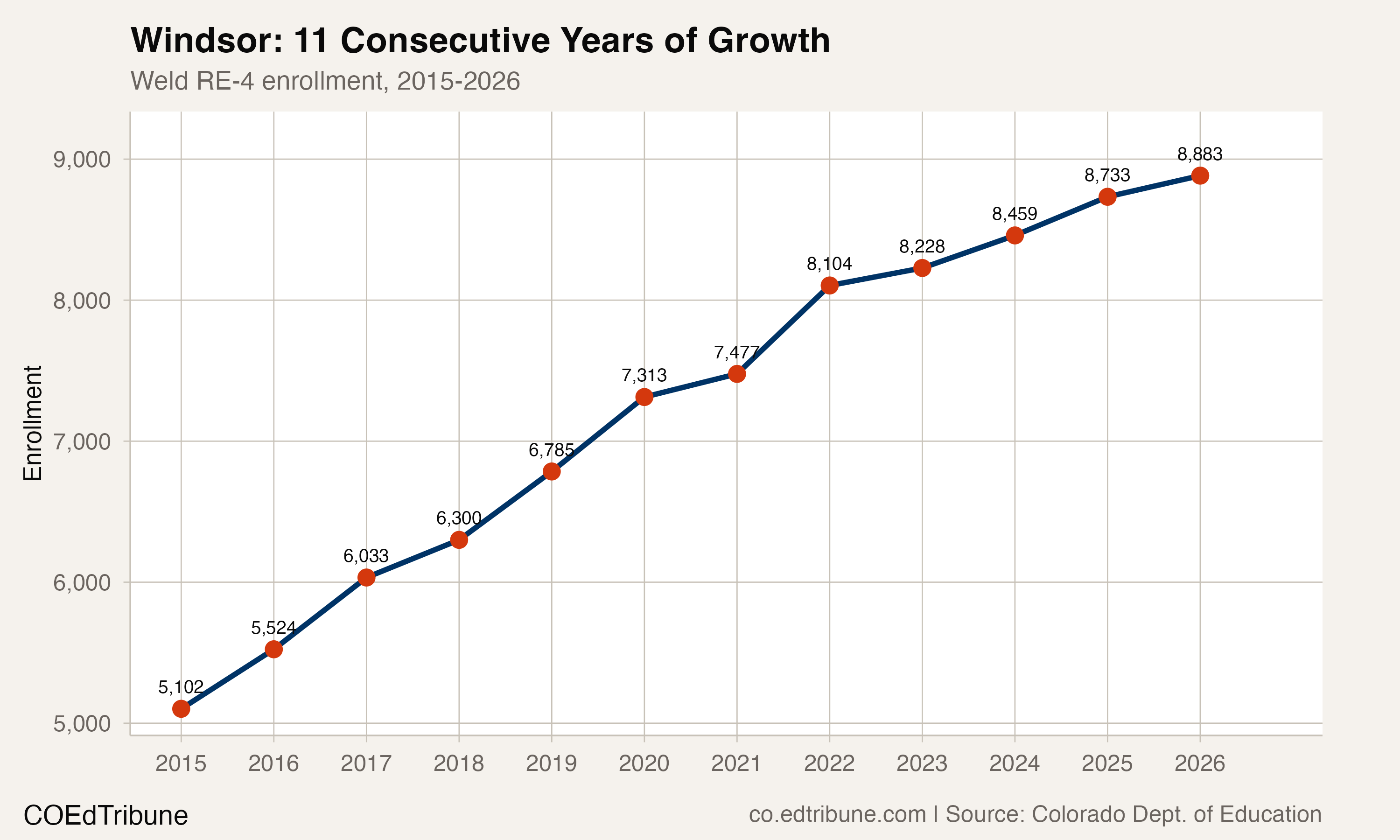
Weld RE-4 recorded eleven consecutive annual increases within the original enrollment files checked, while district context underscores the difference between city and school-district boundaries.
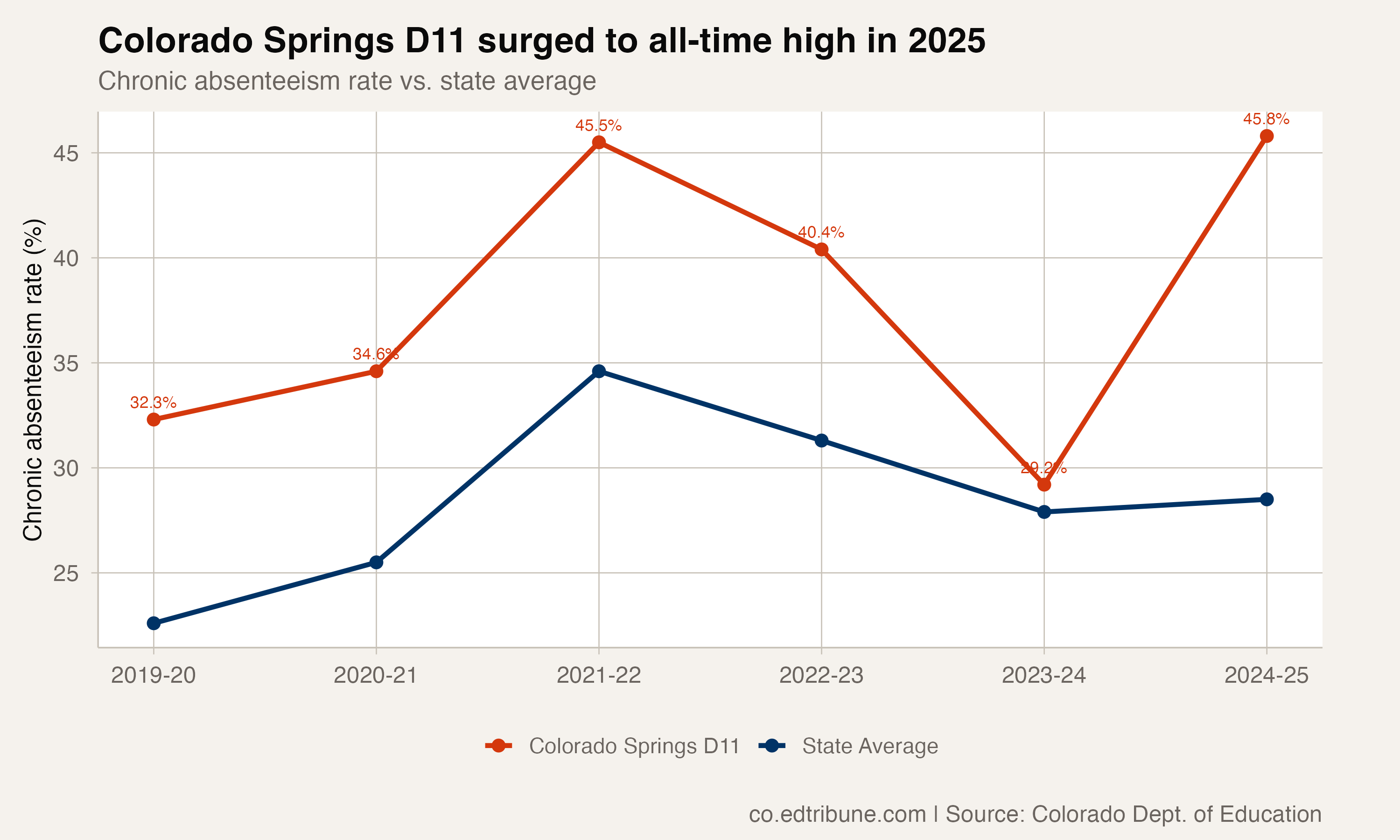
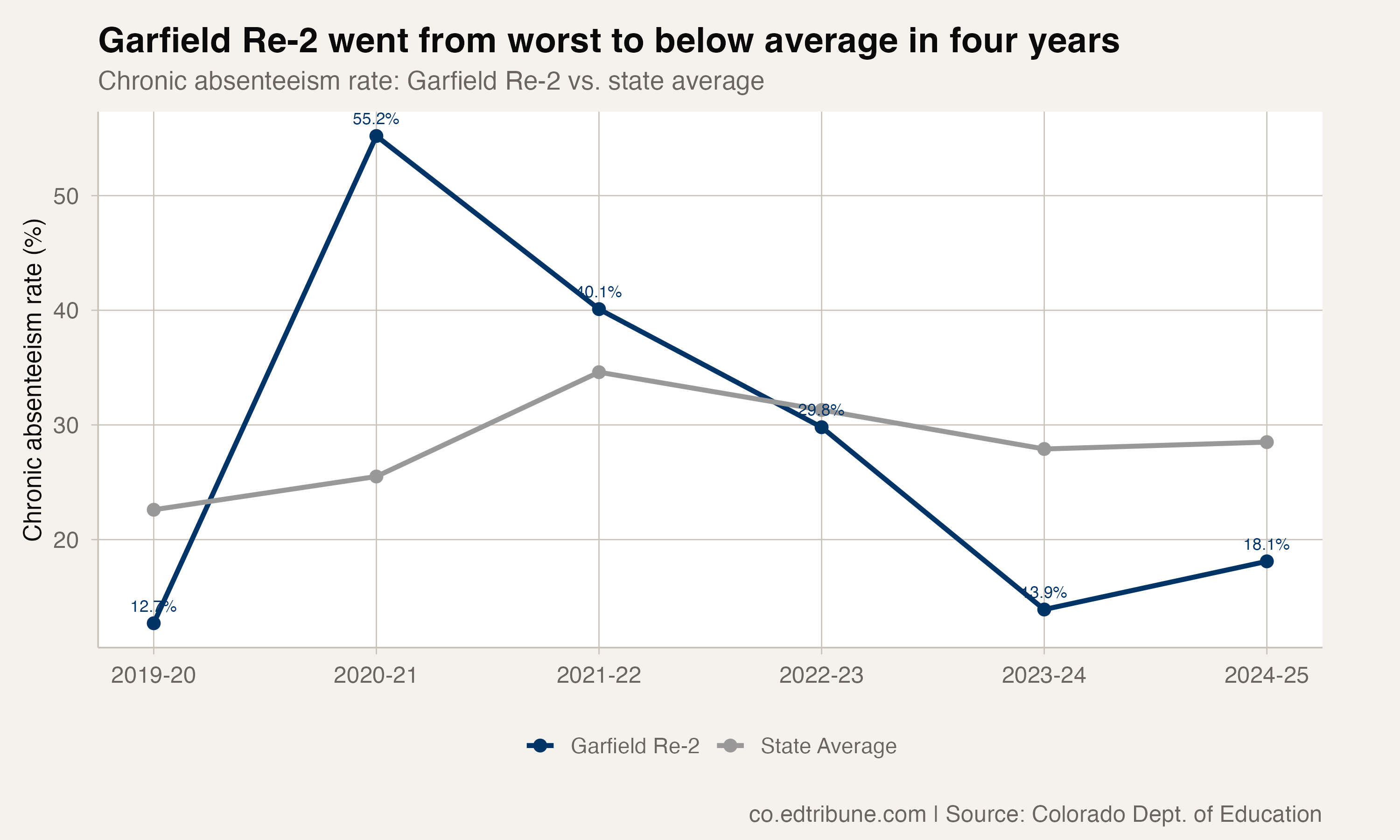
The district reported a small decline after an increase the year before. Its recent attendance series remains below Colorado’s separately published State rate.
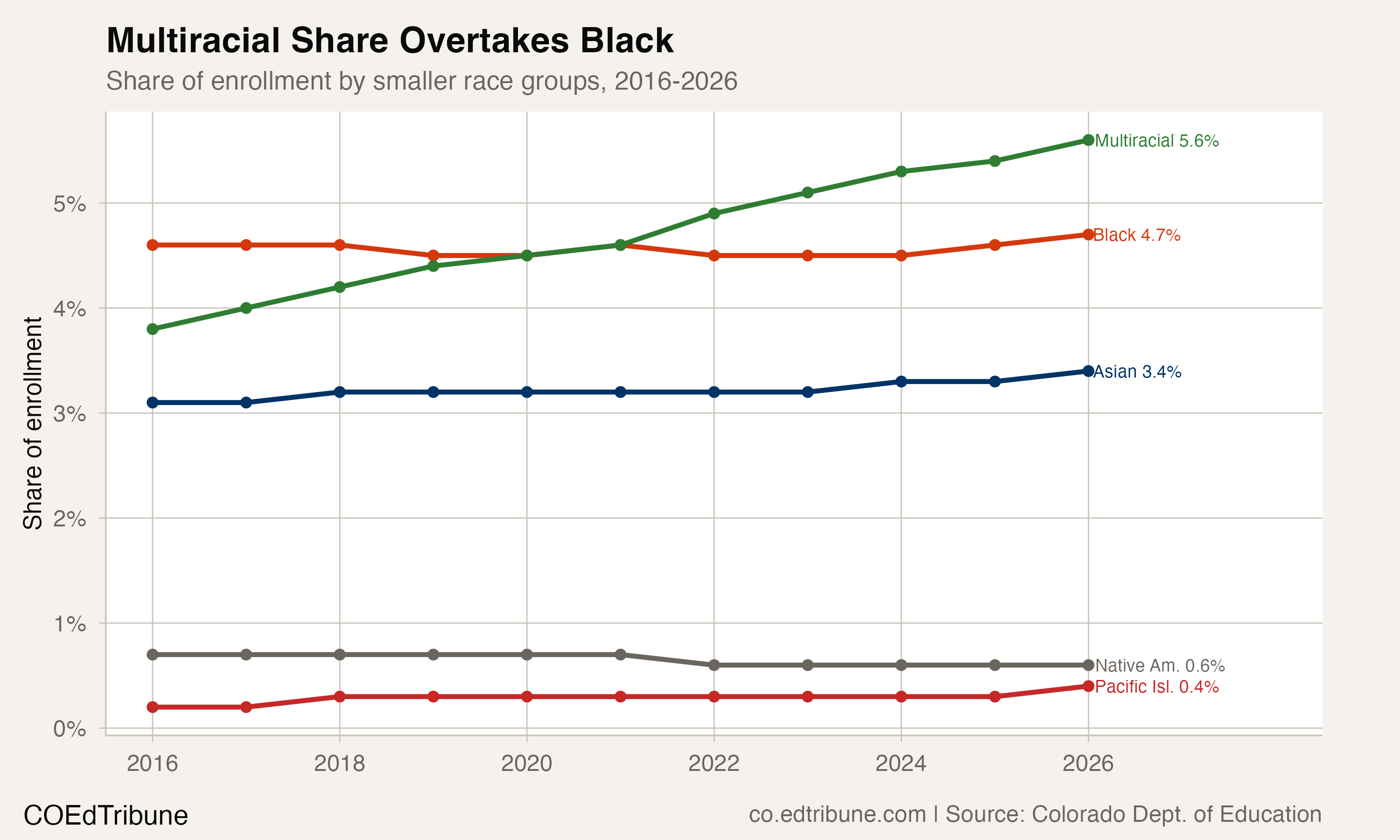
Colorado reported 48,485 multiracial students in 2025–2026, up from 34,393 in 2015–2016. The category grew in each checked annual comparison and ranked third by the final count.
The published rate for students experiencing homelessness reached 76.9% in 2025–2026. Denver’s overall chronic absence rate declined.
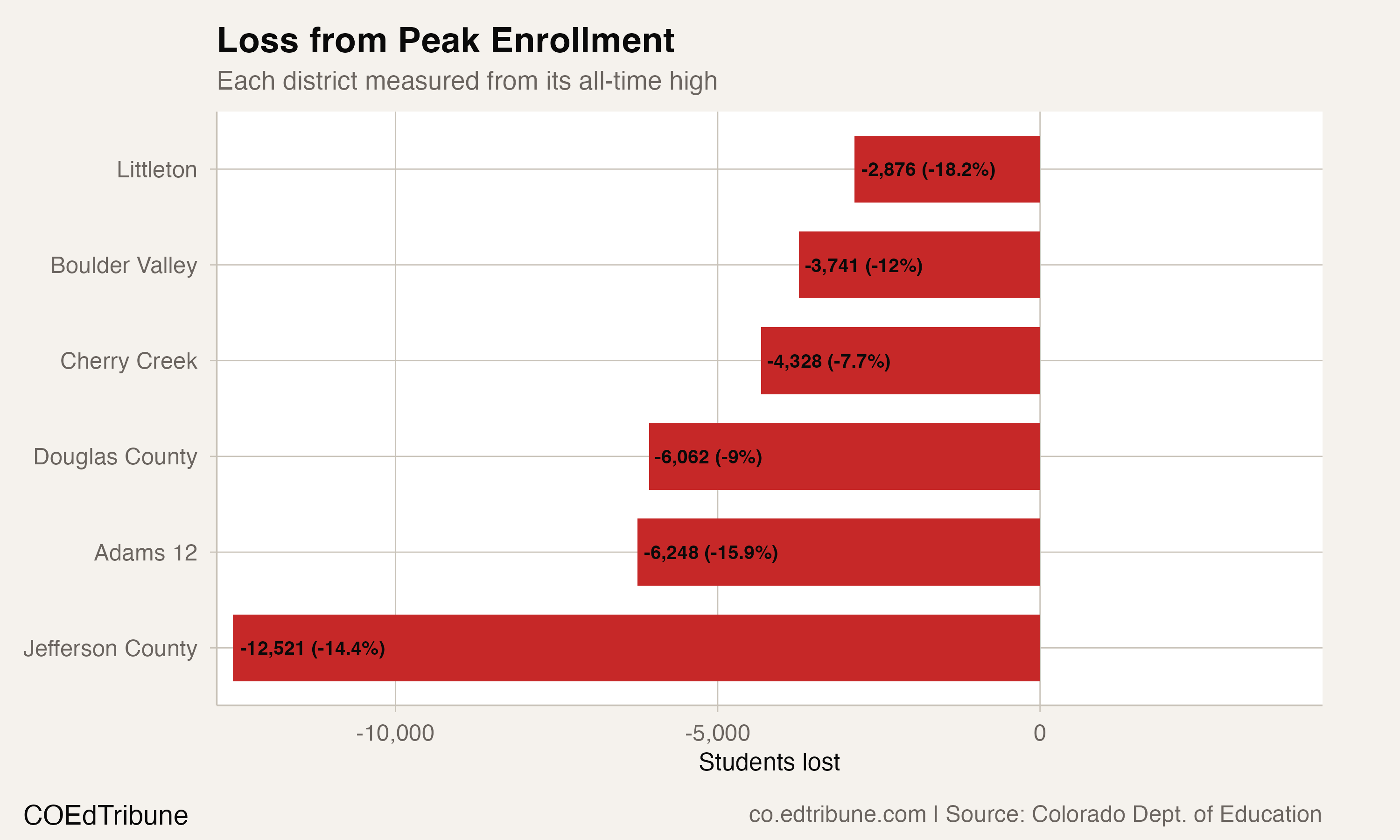
Six districts reported their lowest enrollment within the original annual files checked. Their individual peak losses differ from a comparison using a common pre-pandemic baseline.
The district reported a modest decline after a 16.6-point increase. Its attendance rate history and subgroup measures require separate comparisons.