Correction: Historical totals and comparisons now use the complete original annual membership files. The earlier account mixed incomplete totals with unsupported explanations for the decline. The historical low described here applies to the available annual files.
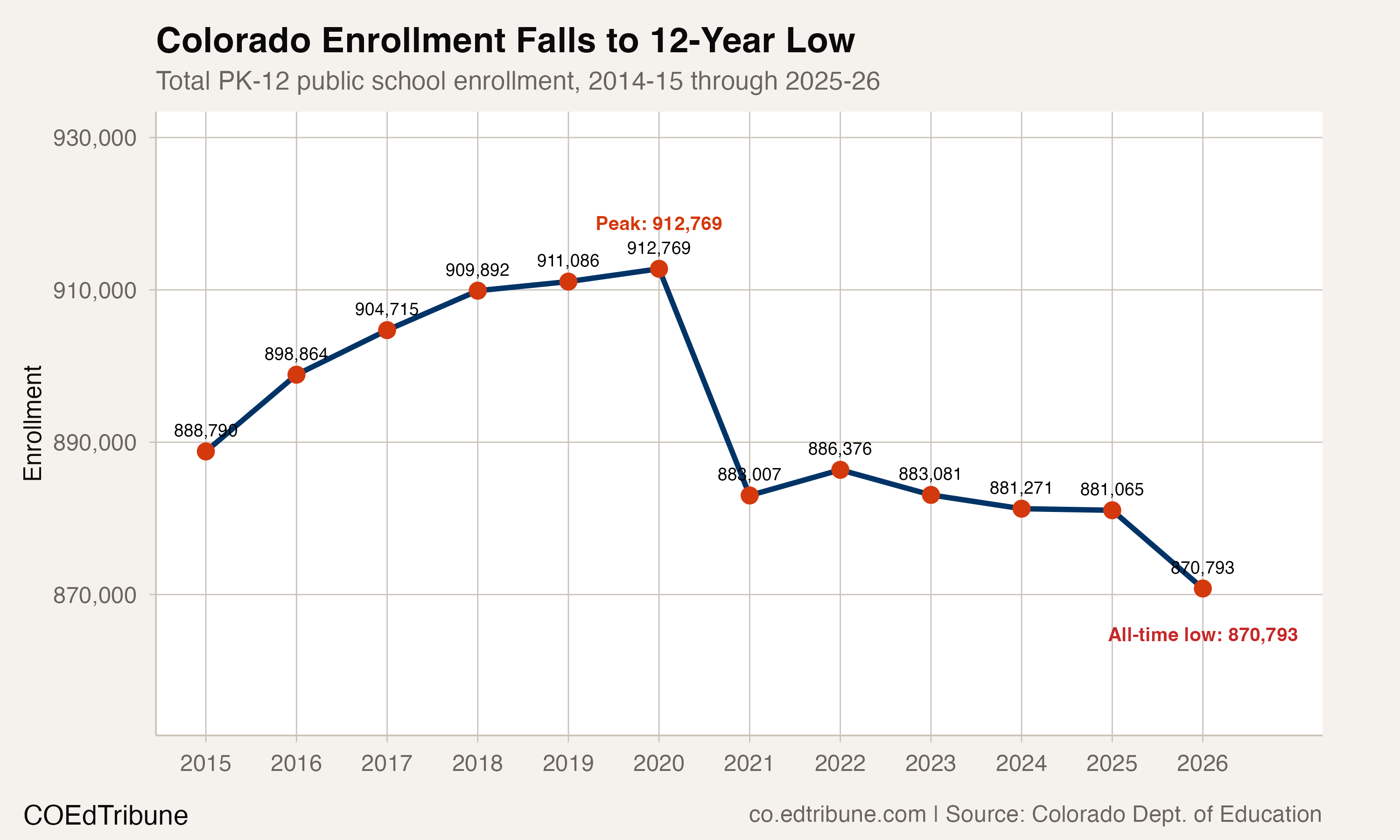
Colorado’s public-school enrollment fell to 870,793 in 2025–2026, last school year and the most recent published data, a decline of 10,272 students, or 1.2%, from the previous year. It is the lowest count in the available original annual-file panel. The comparison covers 12 reporting years, beginning with the 2014–2015 school year.
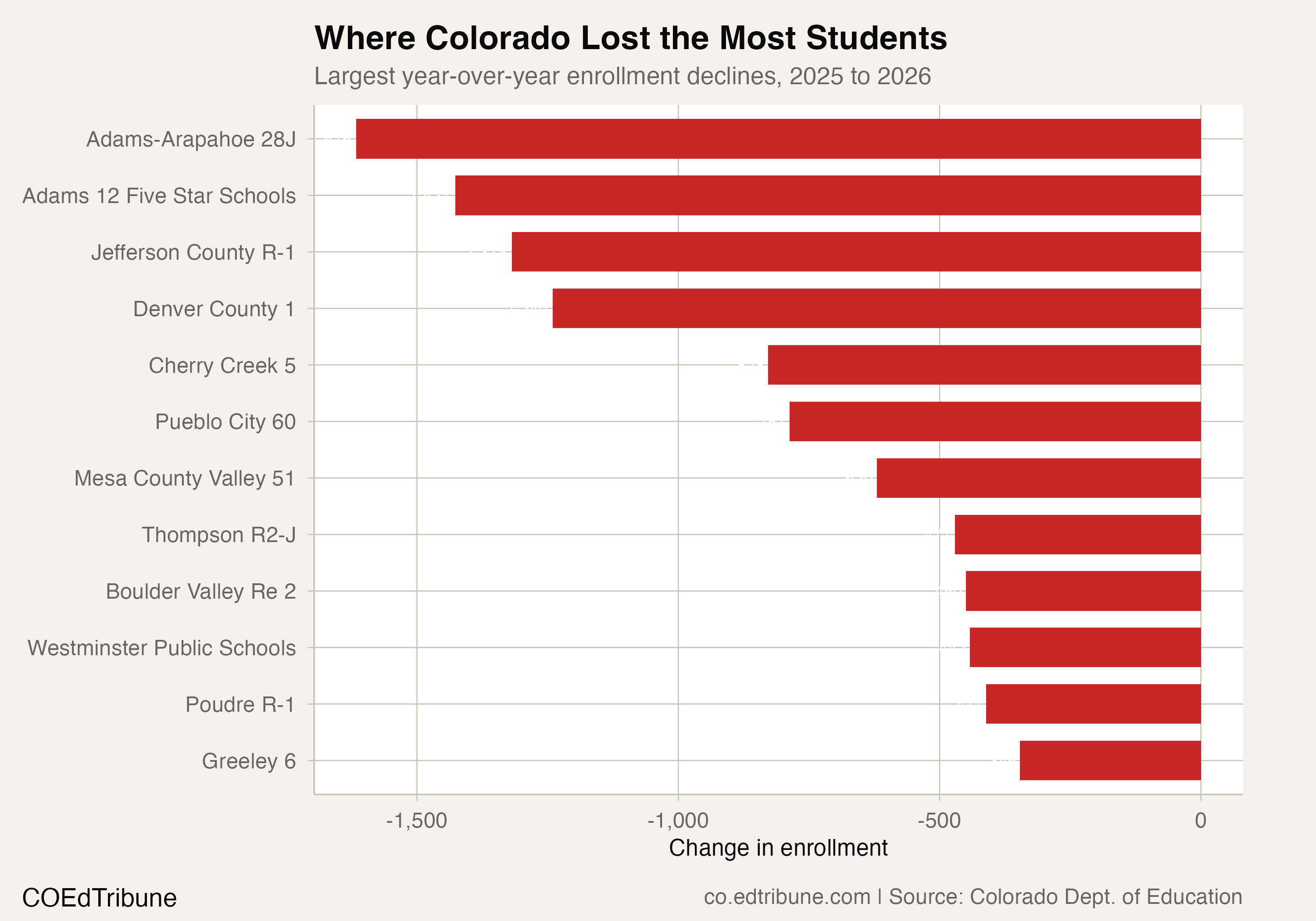
The statewide change has a concrete local counterpart. Adams-Arapahoe 28J↗ET lost 1,616 students in the latest annual comparison. Jefferson County R-1↗ET lost 1,318, and Denver County 1↗ET lost 1,240. Those are changes in the named organizations’ enrollment; the statewide figure also includes students elsewhere in Colorado.
The rebound did not restore the peak
The original files put the peak at 913,223 students in the 2019–2020 school year. The latest count is 42,430 below that level, a reduction of 4.6%. That comparison uses the published statewide totals at both endpoints.
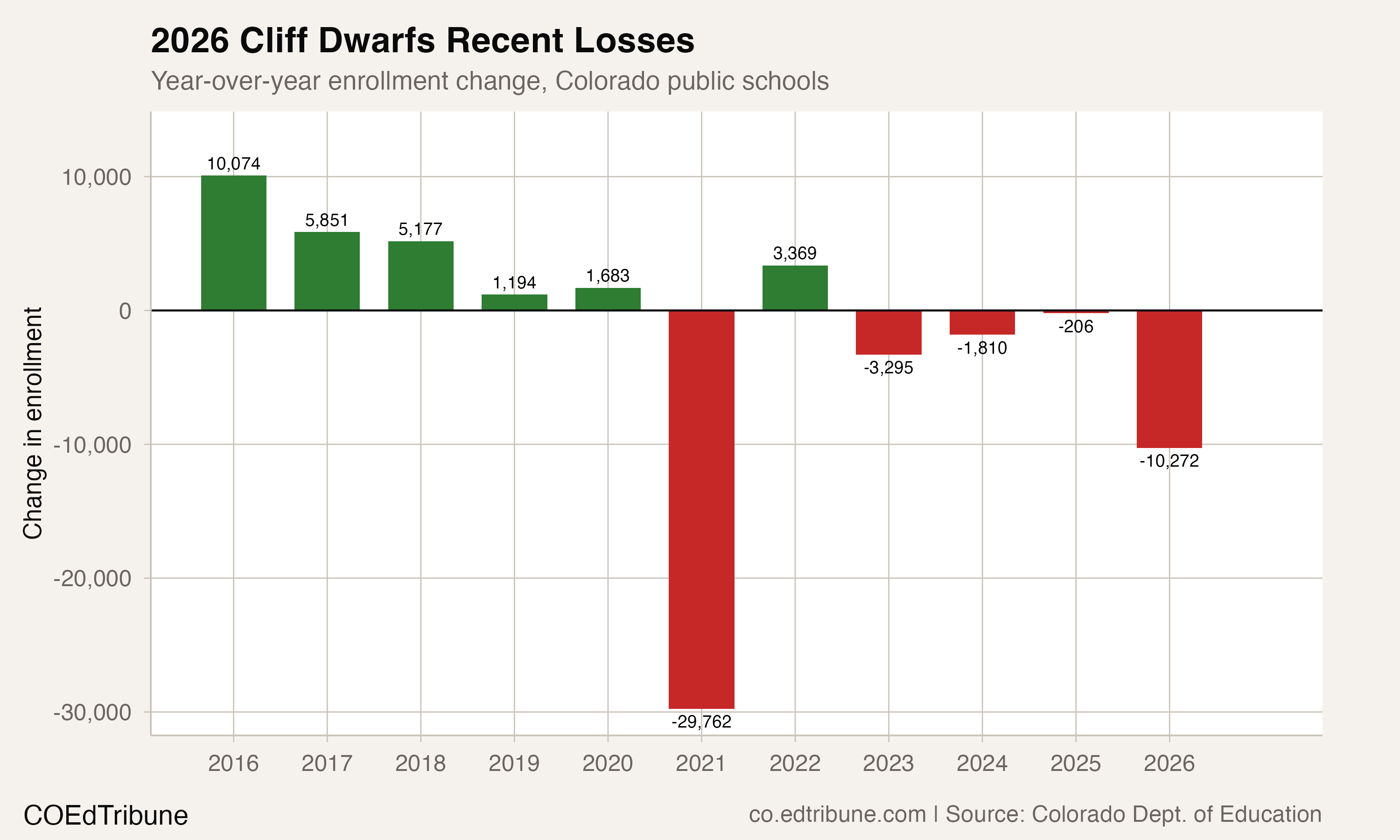
The path between the endpoints matters. Enrollment fell by 30,024 in the first pandemic-era annual comparison, then increased by 3,318 in the next. The partial rebound was followed by losses of 3,253, 1,800 and 399 before the most recent decline.
The latest annual loss is the largest after excluding the transition into the school year ending in 2021. That is a comparison within this panel, not a claim about every year of Colorado school history. It also does not identify a cause: a change in membership does not, by itself, separate births, migration, transfers or decisions about where children attend school.
For district planning, the renewed loss matters more than a smooth line drawn between the peak and the endpoint. The rebound and subsequent declines show why a short recovery cannot be assumed to continue. The records describe enrollments already reported, rather than a forecast of the class arriving next fall.
The comparison includes organizations of different kinds
Among the 95 local education organizations with at least 500 students in the preceding year, 75 declined, 19 grew and 1 was unchanged. This size cutoff is an editorial choice. The selected organizations accounted for 97.7% of the published statewide membership at that starting point.
The full endpoint comparison contains 186 organizations. A smaller organization is not missing merely because it falls below the cutoff. The comparison preserves the same native organization identities at the compared endpoints.
Pueblo City 60↗ET lost 787 students in the latest year. That places a statewide number alongside a local change without treating every district’s experience as interchangeable.
The state’s membership reports include BOCES schools, detention centers and alternative schools; the organization comparison should not be read as a count of interchangeable geographic school districts.
The history here uses each original annual file. Later online summaries can revise earlier values, so those revisions are not inserted into this panel piecemeal. The latest published school year is 2025–2026. It is last school year’s count, not a live tally of children attending this fall.
Enrollment alone does not settle a building, staffing or program decision. Those decisions require the local distribution of students and the services a district provides. The statewide files establish the size and direction of the measured change; local records must establish where the planning response belongs.
Detailed code that reproduces the analysis and figures in this article is available exclusively to EdTribune subscribers.
Discussion
Sign in to join the discussion.
Loading comments...